
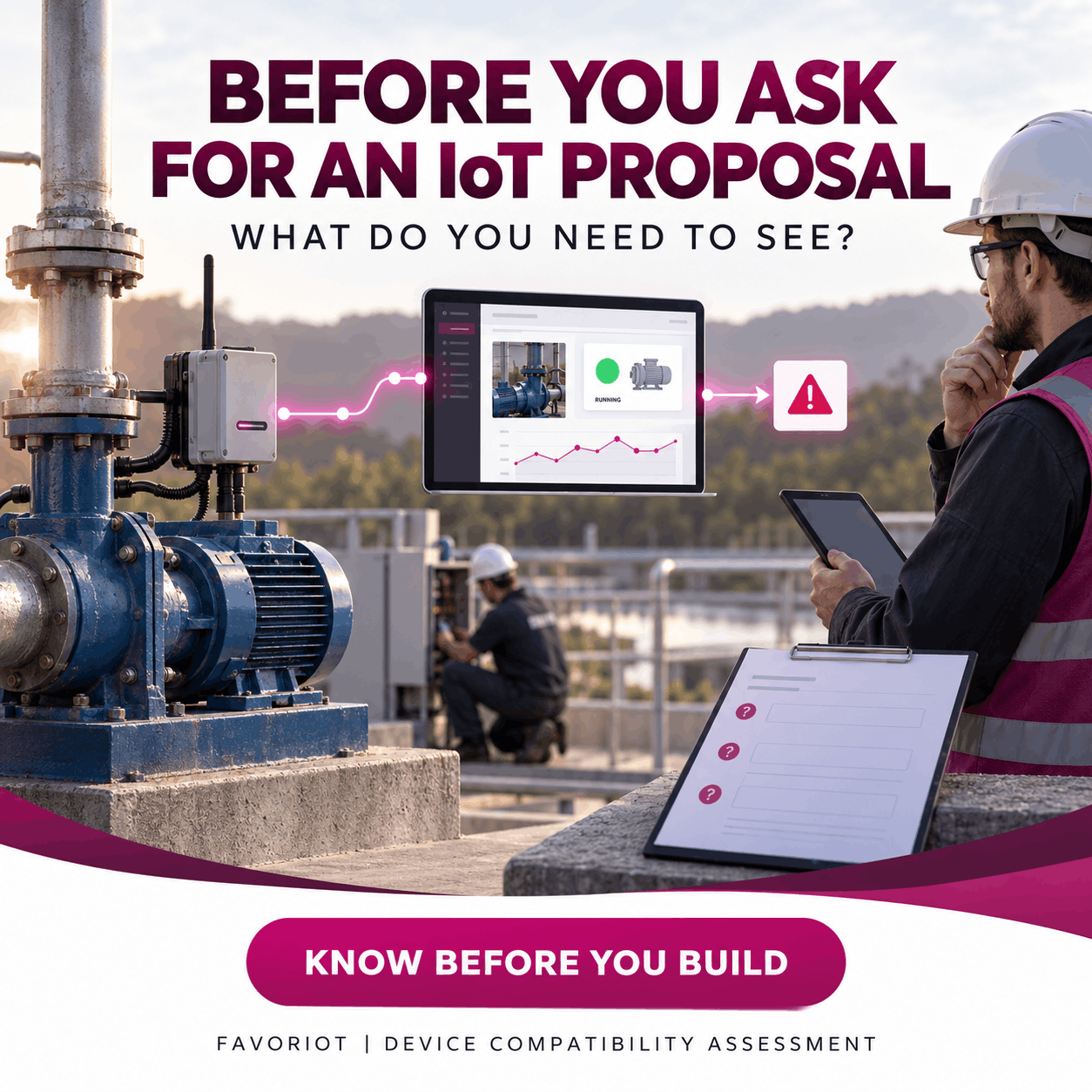
“Can you send us a proposal?”
At FAVORIOT, we welcome the opportunity to discuss a customer’s project. The request often comes from a real concern: a pump that may stop without warning, equipment spread across distant sites or a team making decisions without current data. A proposal can help move that conversation forward, but only when we understand the problem well enough to recommend the right work.
Sometimes the initial request is broad: “We have several pumps. Suggest the best solution and give us a price.” We may not yet know what equipment is installed, whether it can share data, how each site connects to a network or who should receive an alert. If we and our partners prepare a detailed design at that stage, much of it will rest on assumptions. Those assumptions can change the cost and scope once the project begins.
What Does Your Team Need to See?
The first question is operational rather than technical. Does your team need to know whether a pump is running? Are you trying to spot unusual energy consumption, detect a loss of connectivity or reduce routine site visits? Each goal needs different information and may call for a different first step.
We also ask what happens after someone sees the data. An alert is useful when it reaches a person who knows what it means and can respond. A dashboard is useful when it helps a team make a decision. That is why we want to understand the people and processes around the equipment before recommending what to display on a screen.
What Can Your Existing Equipment Tell Us?
A device may work perfectly at a site but still be difficult to connect. We need to check what data its controller or sensor can provide, how that data can be accessed and whether technical documentation is available. Connectivity, power and site access can also affect the proposed approach, especially for remote assets.
This is where clear roles matter. FAVORIOT helps customers connect data to our AIoT platform and turn it into dashboards, alerts and operational visibility. Device suppliers, system integrators and field partners bring their expertise in hardware, connectivity, installation and site support. When each party’s responsibilities are understood early, the proposal becomes more useful to the customer and more realistic for the people who will deliver it.
Define the First Step Before Pricing the Whole Project
If the requirements are still taking shape, a scoped assessment is often the right starting point. It lets us examine the operational need, review the available devices and data, identify connection requirements and work out where specialist partners may be needed. The customer can then see what is known, what remains uncertain and what a sensible pilot should test.
A pilot should answer practical questions. Can the selected assets send reliable data? Does the dashboard show information the operations team can use? Do alerts reach the right people? Has the team learned enough to decide whether to expand across more equipment or sites? Answers from a focused pilot provide a firmer basis for a wider deployment and its cost.
Five Things to Share When You Contact Us
You do not need a finished technical specification to begin. These details will help us have a more productive first conversation:
- The problem: What can your team not see or confirm today?
- The assets: Which equipment and sites are involved?
- The existing data: What sensors, controllers or systems are already in place?
- The decision process: Who owns the project, what budget has been considered and how will the work be awarded?
- The first goal: What would a successful pilot prove?
It is fine if some answers are uncertain. Identifying those gaps is part of defining the work. What matters is establishing a shared understanding before anyone commits to an architecture, timeline or price.
Planning an IoT project but unsure what to request? Contact FAVORIOT to discuss a Device Compatibility Assessment. Tell us what assets you want to monitor and what your team needs to know. We can help assess what is ready to connect, identify the partners needed for any site work and define a practical next step toward operational visibility.