Posts in NEWS

Favoriot Developer Community

Favoriot Developer Community: Growth, Reach, and Emerging Impact (As of April 1, 2026)

April 1st, 2026 Posted by BLOG, Internet of Things, IOT PLATFORM, NEWS, PRODUCT 0 thoughts on “Favoriot Developer Community: Growth, Reach, and Emerging Impact (As of April 1, 2026)”

The Favoriot Developer Community has progressed from a modest starting point to a structured, increasingly international ecosystem of developers, institutions, and industry participants. Its growth reflects not only rising interest in IoT development, but also a broader shift toward practical, application-driven adoption of connected technologies.

This article provides an analytical view of the community’s evolution, its geographic distribution, the types of organisations involved, and the application domains that are shaping its development trajectory.

Evolution of the Community

In its early phase, the community was primarily driven by exploratory use. Developers, students, and early adopters engaged with the platform to understand device connectivity, data ingestion, and basic visualisation.

Over time, this exploratory activity matured into more structured development efforts. The focus gradually shifted from proof-of-concept experimentation toward building functional systems with defined use cases. This transition marks an important milestone, indicating that the platform is no longer used solely for learning but increasingly for solution development.

The current state of the community reflects a layered progression:

  • Initial onboarding through experimentation
  • Skill development through iterative prototyping
  • Advancement toward applied, real-world use cases

This progression is typical of ecosystems that support both education and industry adoption.
Favoriot Developer Community

Geographic Distribution

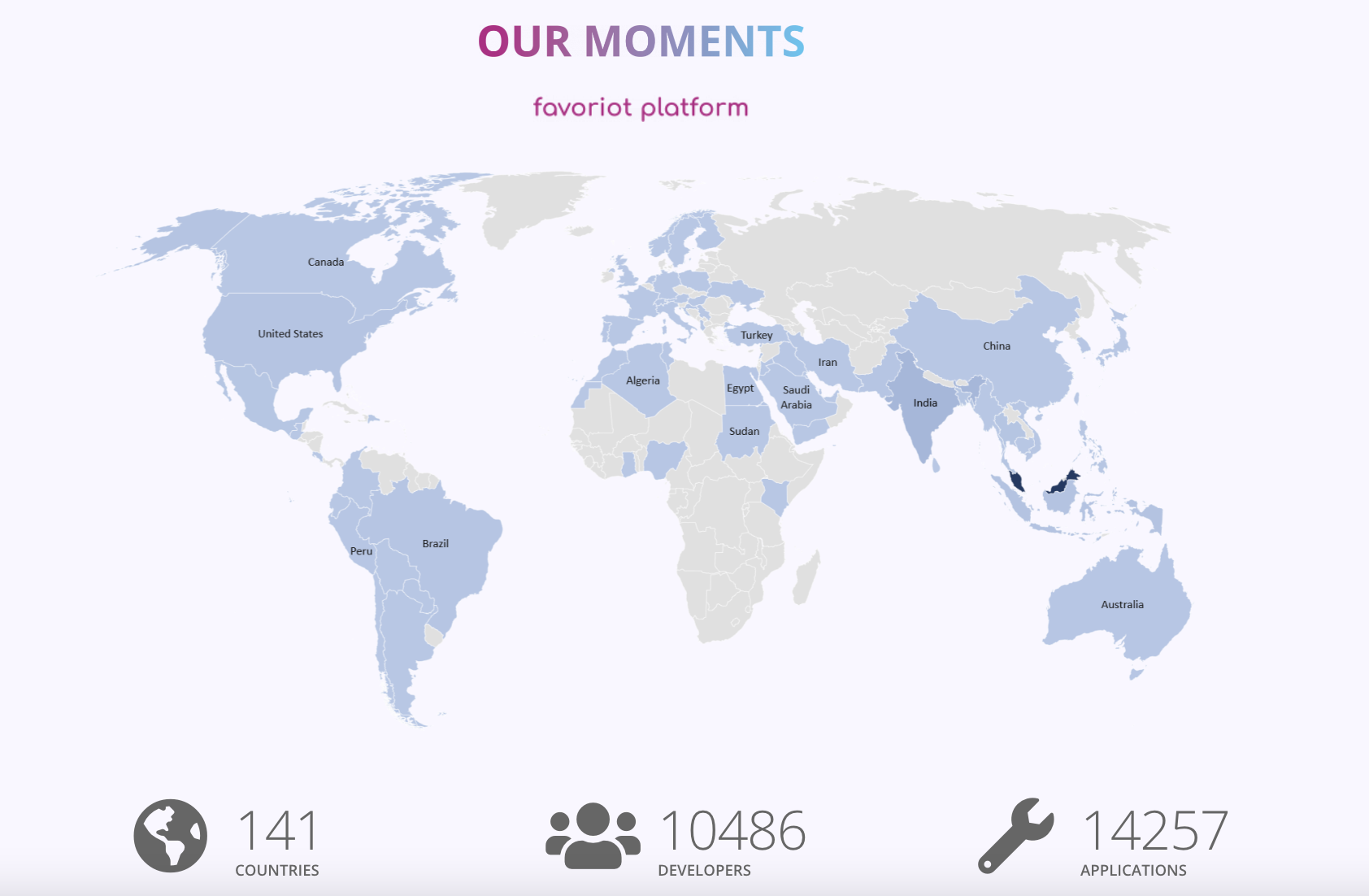
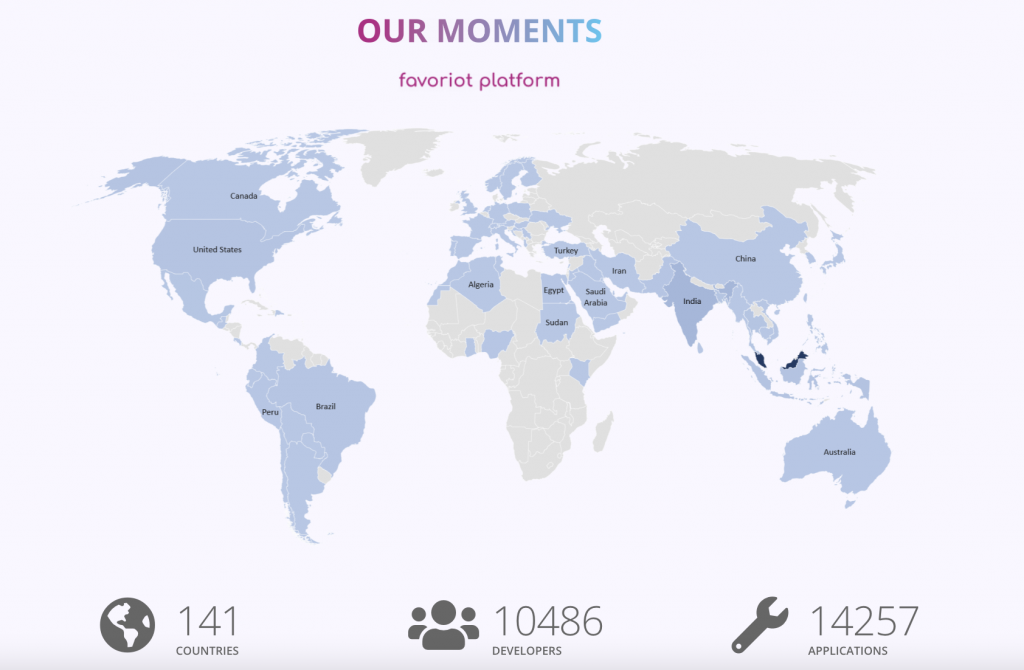
The Favoriot Developer Community demonstrates a strong regional foundation with growing international participation.

Top 5 countries by user concentration:

  1. Malaysia
  2. India
  3. Indonesia
  4. Philippines
  5. Thailand

Malaysia remains the primary contributor, supported by sustained engagement with universities, training initiatives, and local industry collaborations. This provides a stable base for continued growth.

The presence of India, Indonesia, and the Philippines highlights strong engagement from emerging digital economies where IoT adoption is accelerating. Thailand’s inclusion reflects regional expansion within Southeast Asia.

Overall, the geographic distribution suggests that the platform resonates particularly well in markets with a combination of technical talent, growing digital infrastructure, and demand for cost-effective IoT solutions.

Organisational Demographics

The community is characterised by a diverse mix of participants across different organisational types. This diversity is a key strength, as it enables knowledge exchange across academic, technical, and operational domains.

Top 5 organisation types:

  1. Universities and academic institutions
  2. Students and individual developers
  3. System integrators and solution providers
  4. Corporate and industrial organisations
  5. Government and public sector entities

Academic institutions and students form the largest segment, reflecting the platform’s accessibility and suitability for learning environments. This segment plays a critical role in talent development and early-stage experimentation.

System integrators and solution providers represent the bridge between prototypes and deployment. Their involvement signals increasing interest in commercial applications and integration into existing systems.

Corporate and industrial users indicate growing recognition of IoT as a tool for operational improvement. Meanwhile, participation from government agencies suggests alignment with broader initiatives in smart cities, infrastructure monitoring, and public service optimisation.

Application Landscape

An analysis of projects developed within the community reveals several dominant application categories. These categories reflect both global trends and region-specific priorities.

1. Smart Environment Monitoring

Applications include weather monitoring, air quality tracking, and flood detection systems. These use cases are often foundational and serve as entry points for developers.

2. Smart Mobility and Tracking

Projects focus on vehicle tracking, fleet management, and logistics monitoring. These applications address operational visibility and asset management challenges.

3. Energy and Utility Monitoring

This category includes energy consumption tracking, water monitoring, and leakage detection. These solutions are closely linked to cost management and resource optimisation.

4. Smart Agriculture

Applications involve soil monitoring, irrigation control, and greenhouse management. These projects are particularly relevant in regions where agriculture remains a key economic sector.

5. Industrial Monitoring and Predictive Systems

More advanced implementations include machine condition monitoring, vibration analysis, and predictive maintenance. These use cases demonstrate a shift toward higher-value, data-driven decision support systems.

Key Observations

Several insights emerge from the analysis of the Favoriot Developer Community:

  • Strong academic foundation
    The high participation from universities and students ensures a continuous pipeline of skilled developers and new ideas.
  • Gradual transition to industry use
    The presence of system integrators and corporate users indicates movement toward commercial deployment.
  • Regional strength with global potential
    While the community is anchored in Malaysia and Southeast Asia, its reach is expanding into other regions with similar adoption needs.
  • Application-driven engagement
    Developers are not only learning the technology but applying it to solve practical problems across multiple sectors.

The Path Forward

The next phase of growth will depend on the community’s ability to move beyond experimentation toward scalable deployment.

The critical success factors include:

  • Converting prototypes into deployable solutions
  • Strengthening collaboration between academia and industry
  • Supporting system integrators in delivering production-grade implementations
  • Expanding into new geographic markets through partnerships

This transition will define the community’s long-term value and its contribution to the broader IoT ecosystem.

Conclusion and Call to Action

The Favoriot Developer Community has established a strong foundation built on learning, experimentation, and gradual progression toward real-world applications.

The opportunity now lies in accelerating this momentum.

For existing members, the focus should shift toward building solutions that address real operational challenges and can be deployed at scale.

For new participants, the barrier to entry remains low. The platform provides a practical environment to begin developing IoT applications and to progress from basic connectivity to meaningful outcomes.

Organisations, developers, and institutions interested in advancing their IoT capabilities are encouraged to engage with the Favoriot Developer Community and help shape the next phase of connected solutions.

Register Favoriot for FREE and give it a try!

Favoriot Tutorials

[TUTORIALS] – IoT Projects Using FAVORIOT

March 27th, 2026 Posted by BLOG, HOW-TO, Internet of Things, IOT PLATFORM, NEWS, PARTNER, PRODUCT, TIPS, Training 0 thoughts on “[TUTORIALS] – IoT Projects Using FAVORIOT”

Projects from FAVORIOT Community

  1. From Student Project to Smart City Solution: How This IoT Environmental System Is Turning Real-Time Data into Action
  2. Inside a Smart Environment Monitoring System: A Student’s ESP32 IoT Project That Combines 5 Sensors and Cloud Analytics
  3. A Student Innovation in Smart Kitchen Safety Using IoT
  4. Edge AI Meets Cloud Intelligence: Evaluating Favoriot for Lightweight Telemetry and Rapid Visualisation
  5. From Embedded Logic to Intelligent Infrastructure: A Smart Parking IoT Journey
  6. From Embedded Project to Scalable IoT Architecture: A First-Year Student’s Growth Story
  7. Learning IoT by Doing: Ts. Dyg Khayrunsalihaty Bariyyah Abang Othman’s Troubleshooting Journey
  8. From Classroom to Gold Medal: A Student’s Real-World IoT Journey with Favoriot at ITEX
  9. Hands-On IoT Exploration: Lessons from Adekunle Joshua
  10. We Are Looking for Builders, Not Just Users – Why Naveen’s Story Can Become an Inspiration
  11. Check for new and latest Projects from the Community HERE.

IoT R&D Project Challenges Using Favoriot Insight Framework

  • Daily Project Challenges listed HERE.

Project Proposals

  1. [Tutorial]: Real-Time Tire Pressure and Temperature Monitoring Using FAVORIOT
  2. [Tutorial]: Predictive Vehicle Maintenance Using Sensors and FAVORIOT
  3. [Tutorial]: IoT-Based Smart Vehicle Monitoring System using FAVORIOT
  4. [Tutorial]: Smart Temperature Monitoring in Cold Transportation Using Favoriot
  5. [Tutorial]: Smart Water Quality Monitoring for Cities using Favoriot IoT Platform.
  6. [Tutorial]: Smart Street Lighting System Utilizing IoT and FAVORIOT
  7. [Tutorial]: Automatic Sorting Trash Bin with Favoriot IoT Platform
  8. [Tutorial]: Smart Agriculture Robot using the Favoriot platform
  9. [Tutorial]: Automated Parking System with IoT using Favoriot
  10. [Tutorial]: Automatic Bottle Filling & Capping System Using FAVORIOT Platform
  11. [Tutorial]: Smart Conveyor System with Automatic Object Sorting using Favoriot IoT Platform
  12. [Tutorial]: FAVORIOT Project: Smart Cooling System for Manufacturing Machines Using Favoriot
  13. [Tutorial]: Robotic Arm for Automated Material Handling using Favoriot IoT Platform and Telegram Integration
  14. [Tutorial]: Building a Smart Inventory System with Telegram Alerts Using Favoriot
  15. [How-To] Send Data to the FAVORIOT Platform Using REST, MQTT and CoAP
  16. [Tutorial]: CNC Machine Automation dengan IoT Monitoring Using FAVORIOT
  17. [Tutorial]: Automated Quality Inspection System Using AI & Favoriot
  18. [Tutorial]: Smart Conveyor System with IoT Monitoring
  19. Check for the latest Tutorials HERE.

FAVORIOT Resources

Disclaimer

This article provides a step-by-step guide. The source code may need adjustments to fit the final project design.

A Favoriot Case Study

IoT in Museums: A Favoriot Success Story in Environmental Monitoring and Compliance

March 26th, 2026 Posted by BLOG, Internet of Things, IOT PLATFORM, NEWS, PRODUCT 0 thoughts on “IoT in Museums: A Favoriot Success Story in Environmental Monitoring and Compliance”

Executive Overview

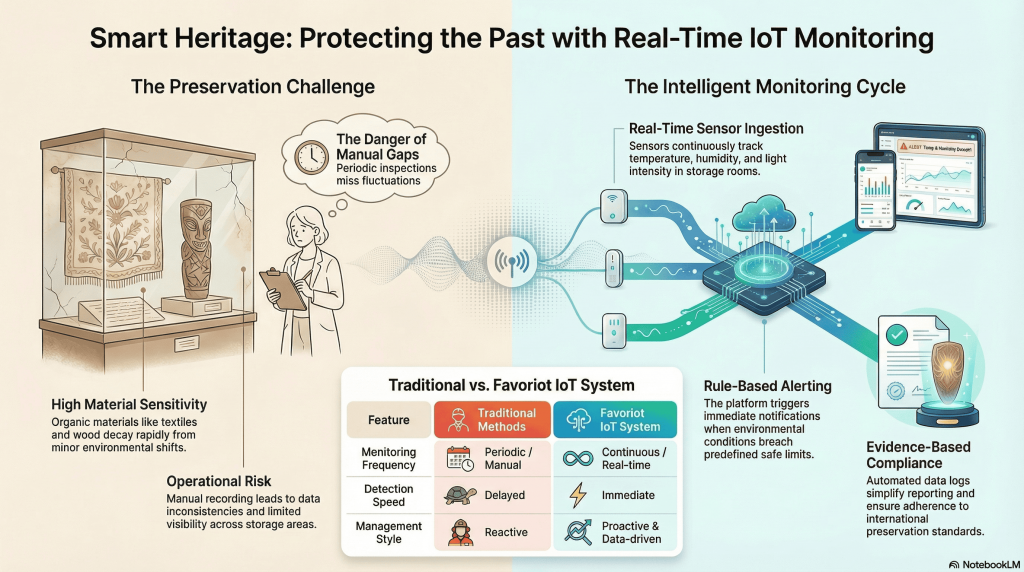
Cultural institutions such as national museums carry a critical responsibility to preserve artefacts that represent a nation’s identity, history, and legacy. These artefacts are often fragile and highly sensitive to environmental conditions. Even minor fluctuations in temperature, humidity, or light exposure can lead to irreversible deterioration.

This case study examines how Favoriot, an AIoT platform provider, enabled a leading national museum to strengthen artefact preservation through continuous environmental monitoring, real-time alerts, and data-driven decision-making. The deployment highlights how IoT can move beyond basic data collection to deliver meaningful outcomes in heritage conservation.

The Preservation Challenge

Museums operate under a constant and often underestimated threat. While catastrophic events are rare, the gradual impact of environmental instability poses a continuous risk.

Artefacts made from paper, textiles, wood, and organic materials are particularly vulnerable. Slight changes in humidity can result in mold or structural distortion. Temperature fluctuations can accelerate degradation. Exposure to inappropriate lighting conditions can cause fading and long-term damage.

Traditional preservation approaches typically rely on periodic inspections and standalone monitoring devices. These methods present several limitations:

  • Environmental changes may go undetected between inspection intervals
  • Manual recording can lead to inconsistencies
  • Limited visibility across storage areas
  • Challenges in maintaining accurate compliance records

As collections grow and preservation standards become more stringent, these limitations increase operational risk.

Objective of the Deployment

The museum aimed to establish a system capable of continuously monitoring environmental conditions within storage rooms where precious and priceless artefacts are preserved.

The key objectives included:

  • Real-time monitoring of temperature, humidity, and light levels
  • Immediate detection of deviations from safe thresholds
  • Automated alerts to support rapid corrective action
  • Centralised data management for analysis and reporting
  • Compliance with international preservation standards

The focus was clear. Protect the most valuable artefacts at their most critical location, the storage environment.

Solution Architecture

Favoriot deployed a Smart Environment Monitoring System using IoT sensors integrated with its platform.

Sensor Deployment in Storage Rooms

Environmental sensors were installed exclusively within storage rooms, where the most valuable and sensitive artefacts are kept.

These sensors continuously measured:

  • Temperature
  • Humidity
  • Light intensity

By focusing on storage areas, the system ensured that the highest-risk environments received constant and precise monitoring.

Data Transmission and Processing

Sensor data was transmitted in real time to the Favoriot platform. The platform enabled:

  • Continuous data ingestion and secure storage
  • Monitoring against predefined environmental thresholds
  • Rule-based alert generation
  • Visualisation through dashboards for operational awareness

Alert Mechanism

The system was configured to trigger alerts whenever environmental conditions moved outside safe limits. Notifications were sent directly to responsible personnel, enabling immediate intervention.

This ensured that corrective action could be taken before any damage to artefacts occurred.

Implementation Approach

The implementation followed a structured process:

  1. Identification of Critical Storage Areas
    Storage rooms housing high-value artefacts were prioritised.
  2. Sensor Installation and Calibration
    Devices were installed and calibrated to ensure accurate measurements.
  3. Platform Integration
    Sensors were connected to the Favoriot platform for centralised monitoring.
  4. Threshold Definition
    Acceptable environmental ranges were defined based on conservation standards.
  5. Alert Workflow Configuration
    Notification systems were established for rapid response.
  6. Training and Handover
    Museum staff were trained to interpret alerts and manage the system effectively.

Key Outcomes

The deployment delivered clear and measurable benefits:

1. Continuous Protection of Priceless Artefacts

Storage environments were monitored continuously, ensuring that artefacts remained within optimal preservation conditions at all times.

2. Faster Response to Environmental Changes

Real-time alerts enabled immediate corrective action, significantly reducing the risk of prolonged exposure to harmful conditions.

3. Structured Data Management

The system provided consistent and reliable data collection, allowing:

  • Historical trend analysis
  • Early identification of recurring issues
  • Data-driven decision-making

4. Strengthened Compliance and Accountability

The platform generated accurate environmental records, supporting compliance with international preservation standards and audits.

5. Improved Operational Focus

Automation reduced reliance on manual checks, allowing staff to focus on conservation and curatorial work.

From Monitoring to Preventive Protection

A key shift in this deployment is the transition from periodic inspection to continuous preventive protection.

Traditional systems often focus on recording conditions. This approach introduces delays between detection and response.

Favoriot enables:

  • Immediate detection of anomalies
  • Automated alerting mechanisms
  • Timely intervention before damage occurs

This transforms monitoring into an active safeguarding process.

Strategic Implications for Museums

This case highlights several important considerations for cultural institutions:

Continuous Monitoring is Essential

Periodic inspections alone cannot guarantee stable preservation conditions, especially for high-value artefacts stored in controlled environments.

Data Must Enable Action

Environmental data must be actionable. Without alert mechanisms and response workflows, its value is limited.

Evidence-Based Preservation Matters

Maintaining accurate records is critical for compliance, reporting, and institutional credibility.

Focus on High-Risk Areas

Targeting storage rooms where priceless artefacts are kept ensures that resources are directed to the most critical environments.

The Favoriot Value Proposition

Favoriot’s role in this project can be summarised through three core strengths:

  • Integrated Platform
    A unified system for monitoring, analytics, and alerting
  • Real-Time Responsiveness
    Immediate detection and notification of environmental deviations
  • Outcome-Focused Deployment
    Emphasis on protecting artefacts rather than simply displaying data

This approach aligns with the increasing demand for solutions that deliver measurable impact rather than standalone features.

Conclusion

Preserving cultural heritage requires continuous attention, precision, and reliability. Artefacts stored in controlled environments depend on stable conditions that must be maintained at all times.

Through its IoT-based Smart Environment Monitoring System, Favoriot enabled the museum to shift from reactive preservation practices to proactive environmental control, specifically in storage rooms where priceless artefacts are kept.

The result is enhanced protection, improved operational confidence, and stronger compliance with preservation standards.

This case demonstrates that when technology is applied with purpose, it becomes an essential safeguard for history itself.

The real question for cultural institutions is simple.

How long can priceless artefacts remain protected without a system that continuously watches over them?

Contact

Contact Favoriot for further inquiry.

Copyright © 2026 All rights reserved