Posts in PARTNER

Why IoT Pilots Don’t Scale — And What You Can Do About It

May 29th, 2026 Posted by BLOG, HOW-TO, Internet of Things, IOT PLATFORM, PARTNER 0 thoughts on “Why IoT Pilots Don’t Scale — And What You Can Do About It”
Why IoT Pilots Don’t Scale — And What You Can Do About It | Favoriot Blog
Favoriot / Blog / Why IoT Pilots Don’t Scale
IoT Strategy

Why IoT Pilots Don’t Scale — And What You Can Do About It

Your sensors are working. Your dashboard is live. The demo went well. So why is the project still stuck at the same stage it was six months ago?

You have sensors sending data. You have a dashboard. And yet, when something goes wrong, people still ask — what actually happened? Here is how to close that gap in three steps.

You are not alone in this. It is the most common IoT story. The pilot worked. Everyone was impressed. Then the project quietly stalled — and now nobody can explain why.

Before you blame the technology, stop. The technology is rarely the problem. The way the pilot was designed is the problem. And the good news is — that is something you can fix.

The Pilot Was Designed to Impress, Not to Scale

Think about how most IoT pilots are run. You pick the best location. The cleanest use case. The most cooperative team. You run it for 90 days, generate a report, and declare success.

But a pilot that is built to impress is almost never built to scale.

The moment you try to replicate it — across ten buildings, fifty machines, or five departments — the gaps appear. The connectivity assumptions break. The integration that worked for one vendor’s device fails for another. The dashboard that one team used does not match how the next team works.

The uncomfortable truth

If your pilot did not ask “how would this work at full scale?” from day one, it was not really a pilot. It was a performance. And performances do not become operations.

Six Reasons Your IoT Pilot Is Still Stuck

  • 1

    Your data stops at the dashboard

    Sensors collect. Data flows. A chart appears. And then nothing. You have not defined what action should happen next. The dashboard is not the destination — it is just the beginning. If your pilot ends at the dashboard, it has not finished the job.

  • 2

    Nobody in the business owns the outcome

    Your IoT pilot lives in IT. But the results it is supposed to deliver belong to operations, facilities, or finance. When nobody in the business unit is accountable for the outcome, the project becomes an orphan after the initial excitement fades.

  • 3

    Your platform was built for one scenario

    Custom-built solutions work well for a single context. Try to extend them — new device types, new departments, new protocols — and the cost explodes. If you built everything from scratch for the pilot, you will have to build everything again for the next use case.

  • 4

    You measured the wrong things

    Uptime. Sensors connected. Data volume. These look technical and credible. But they do not tell you whether you made a better decision because of the data. Measuring the wrong things creates the illusion of success while the real problem stays unsolved.

  • 5

    Your team never learned how the system works

    The vendor set everything up. The vendor ran the pilot. Now the vendor has moved on. And your internal team is managing a system they never fully understood. Dependency without capability is not a deployment — it is ongoing helplessness.

  • 6

    Scaling was assumed, not planned

    Your pilot budget covered sensors and a dashboard. Nobody budgeted for integration, change management, training, platform licences at scale, or ongoing maintenance. Scaling was assumed to happen automatically. It never does.

IoT did not fail your organisation. The plan failed. And the plan failed because nobody designed it for the real world.

Here Is the Three-Step Path Forward

Scaling an IoT project is not about doing the same thing more times. It is a fundamentally different challenge. And it follows a clear path — one that most pilots skip halfway through.

Step 1 — Connect

Bring your devices into one place

Connect your sensors, machines, and systems into a single platform — regardless of vendor or protocol. You cannot see what you cannot reach. And you cannot scale what you cannot connect. The foundation must support multiple device types without requiring you to rebuild for every new scenario.

Step 2 — See

Turn data into something you can actually use

Build dashboards and analytics that show you what matters — not just what is happening. The right view for the right team. Real-time visibility into the assets and environments that affect your operations. This is where scattered data starts to become useful information.

Step 3 — Act

Let your data trigger a response

Set up alerts, automations, and AIoT intelligence that converts insight into action. This is the step most pilots never reach. And it is the only step that delivers real operational value. If your system cannot respond to what it sees, you have not finished building it.

Connect → See → Act. That is the full journey. A pilot that stops at Connect has only proven that sensors can send data. A deployment that reaches Act has proven that IoT works.

The Platform Question You Need to Ask Before Your Next Pilot

One of the most overlooked reasons pilots fail to scale is the platform itself.

If your IoT deployment is built on a single vendor’s proprietary stack, you do not fully own your project. You are renting access to it. And when you try to extend it — new devices, new use cases, new teams — the cost and complexity grow faster than the value.

Ask this before the pilot starts: “If we need to add a new device type or a new department in 12 months, what does that actually cost — in time, money, and effort?” The answer will tell you whether you are building something that can grow or something that will need to be replaced.

Four Questions to Ask Before You Approve Your Next Pilot Budget

Use these before the pilot — not after it stalls.

01
What specific decision will improve because of this data? If the answer is vague, the pilot will be vague.
02
Who in the business — not IT — is accountable for the outcome? If the answer is nobody, the outcome will be nobody’s problem.
03
Can the platform support ten times more devices without rebuilding? If the answer is no, you are planning for a demo, not a deployment.
04
What does full-scale deployment cost — and is that budget realistic? If nobody has asked this yet, ask it now.

A Pilot Should Surface Problems, Not Hide Them

The purpose of a pilot is to learn — not to impress. A good pilot deliberately surfaces the hard questions. Integration challenges. Organisational resistance. Data quality gaps. Alert fatigue. User adoption issues.

It brings those problems to the surface before they are expensive to fix.

A bad pilot hides those problems in the name of a smooth demo. And when the project tries to scale, every hidden problem becomes a visible barrier.

The organisations that successfully scale IoT are not the ones with the most impressive pilots. They are the ones who used their pilots to ask hard questions — and built the answers into their plan before committing serious budget.


Your IoT project does not have to become another cautionary story about pilots that never grew into deployments. But avoiding that outcome starts with one decision: design for scale from day one, not as an afterthought.

The path is clear. Connect your data. See what is really happening. Act on what you find.

That is how you move from a pilot that impressed everyone — to a deployment that helps everyone.

Ready to move from pilot to deployment?

Favoriot helps you connect your devices, see your operations in real time, and act on data — without building everything from scratch.

Explore Favoriot Book a Strategy Call
IoT Strategy AIoT Pilot Projects Scaling IoT Connect See Act Favoriot Digital Transformation
How Macht Engineering Built an Airport IoT Monitoring System with Favoriot

How Macht Engineering Built an Airport IoT Monitoring System with Favoriot

April 6th, 2026 Posted by BLOG, HOW-TO, Internet of Things, IOT PLATFORM, PARTNER 0 thoughts on “How Macht Engineering Built an Airport IoT Monitoring System with Favoriot”

Airports don’t tolerate downtime.

Every system, every component, every utility must work quietly in the background. No noise. No failure. Just consistency. Because the moment something stops working, the impact is immediate.

One of the most overlooked yet critical systems in an airport is water management. Behind the scenes, water pump motors run continuously, supporting operations most passengers never even think about.

But what happens when these pumps fail?

That question led Macht Engineering to design a smarter way to monitor and protect these assets. Not through manual checks. Not through isolated systems. But through a connected, intelligent IoT solution powered by Favoriot.

This is the story of how a traditional monitoring setup evolved into a real-time, data-driven telemetry system.

How Macht Engineering Built an Airport IoT Monitoring System with Favoriot

The Problem No One Notices Until It Fails

Water pump motors are not glamorous assets.

They don’t appear in dashboards shown to executives. They don’t attract attention during innovation showcases. But when they stop working, everything else feels the impact.

In many facilities, monitoring is still done manually or through localised control systems. Technicians check readings. Data is recorded periodically. Faults are often detected only after something goes wrong.

“Are we really seeing what’s happening in real time… or just reacting after the damage is done?”

That question became the turning point.

Macht Engineering recognised that the real issue was not the lack of data. It was the lack of visibility and timely action.

Rethinking Monitoring: From Reactive to Proactive

Instead of waiting for failures, the goal shifted toward early detection and continuous monitoring.

The objectives were clear:

  • Monitor motor performance in real time
  • Detect abnormal electrical behaviour before failure occurs
  • Enable faster maintenance response
  • Protect high-value equipment
  • Ensure uninterrupted operations

But achieving this required more than just sensors. It required a system that could connect, analyse, and present data in a way that teams could act on immediately.

That’s where IoT came in.

Building the System: Industrial Strength Meets Cloud Intelligence

Macht Engineering designed a solution that blends reliable industrial hardware with cloud-based intelligence.

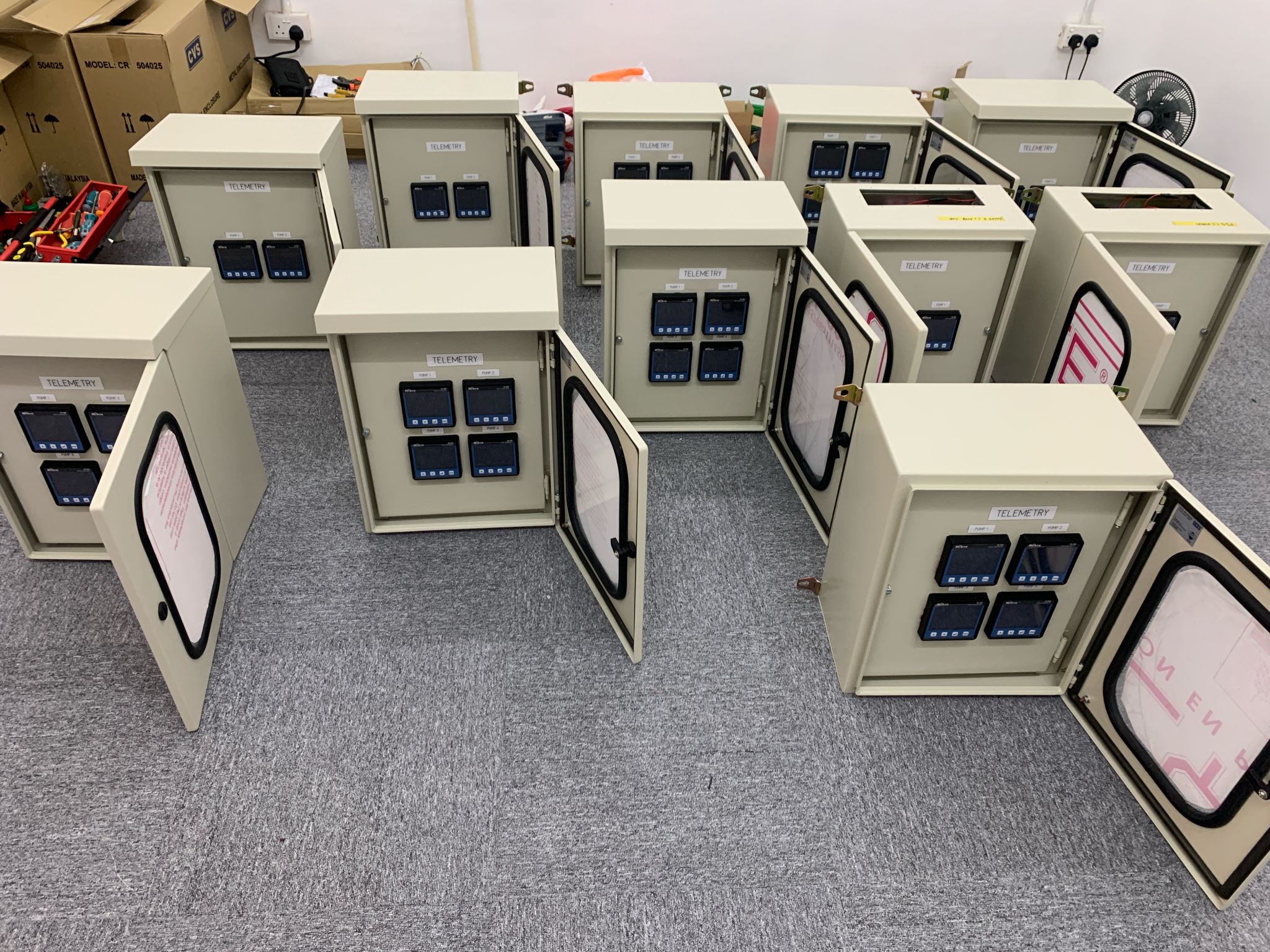
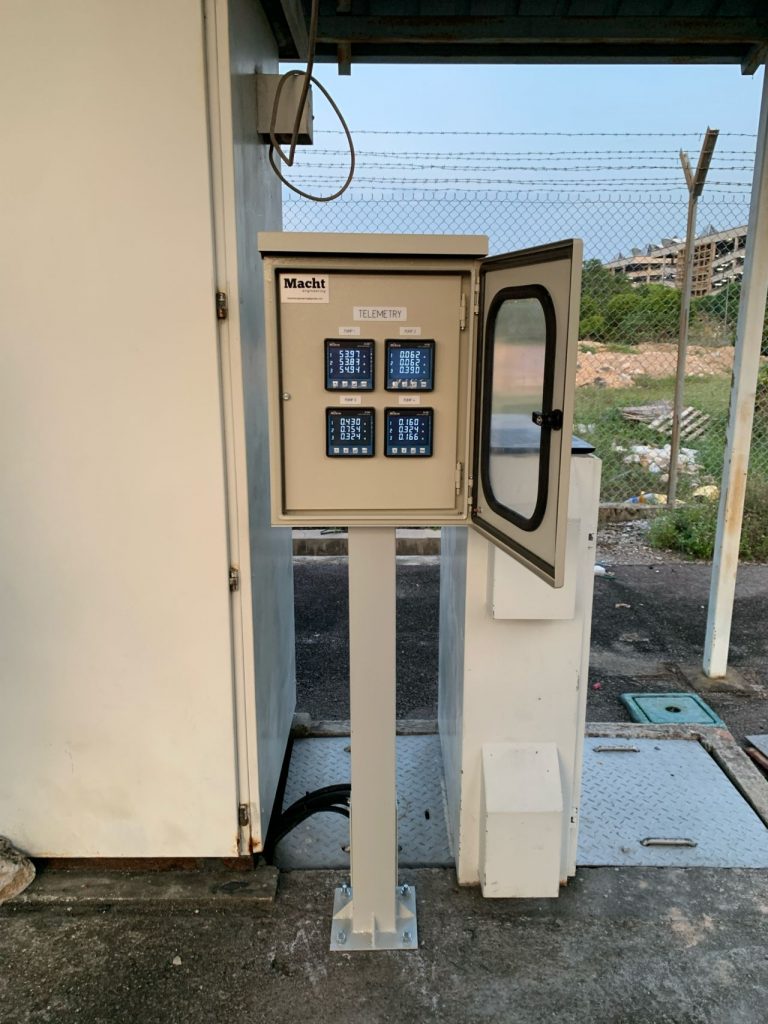
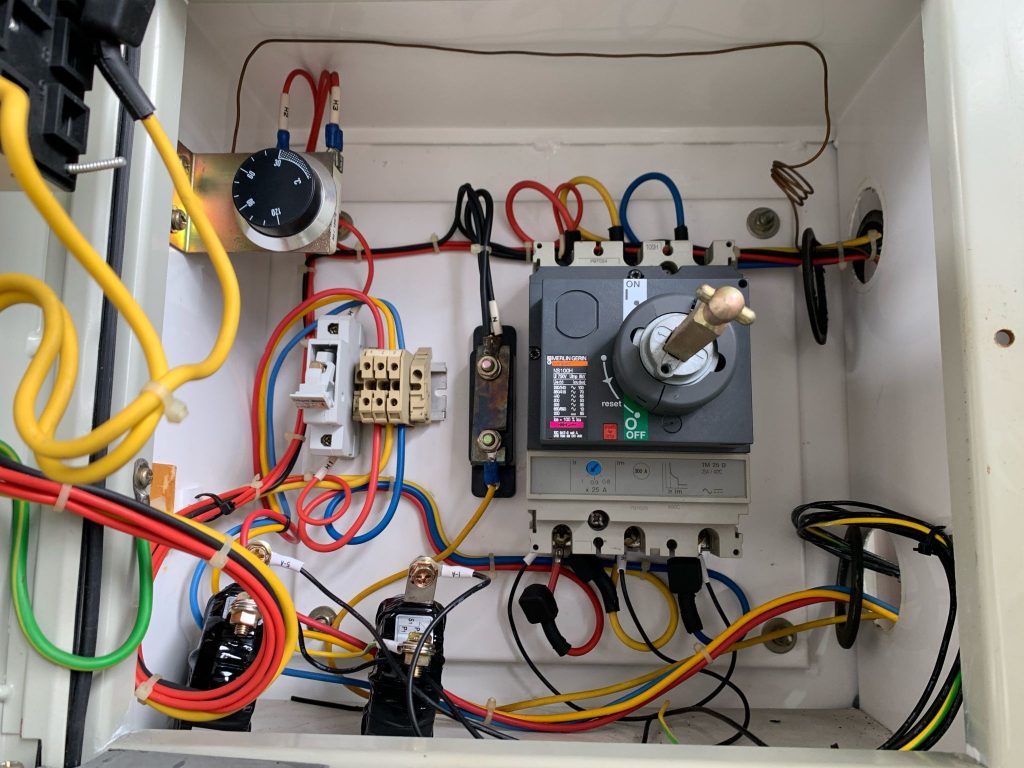
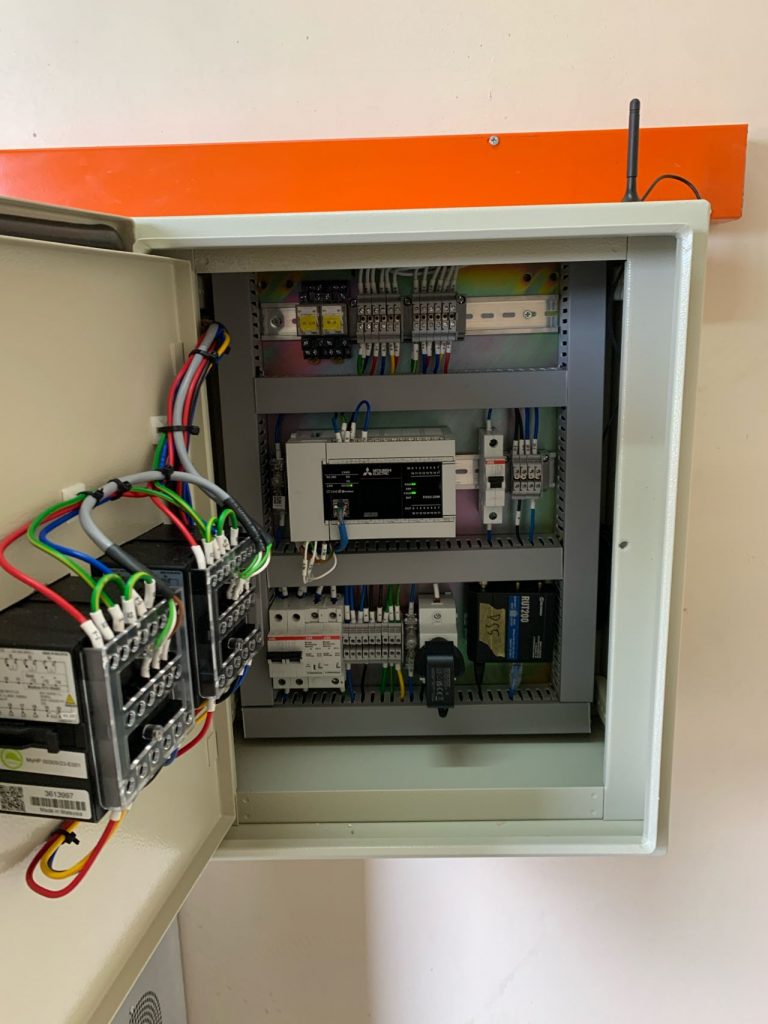
At the heart of the system is the Mitsubishi PLC FX5U, a robust controller widely used in industrial environments. It acts as the brain, collecting data from sensors and executing control logic.

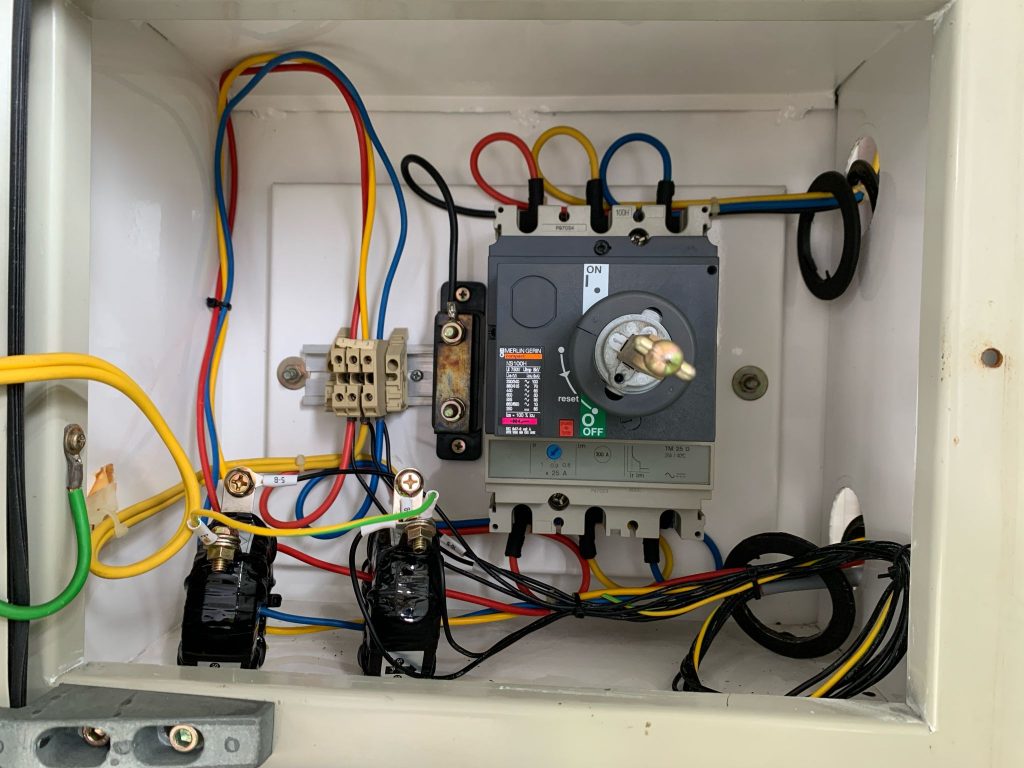
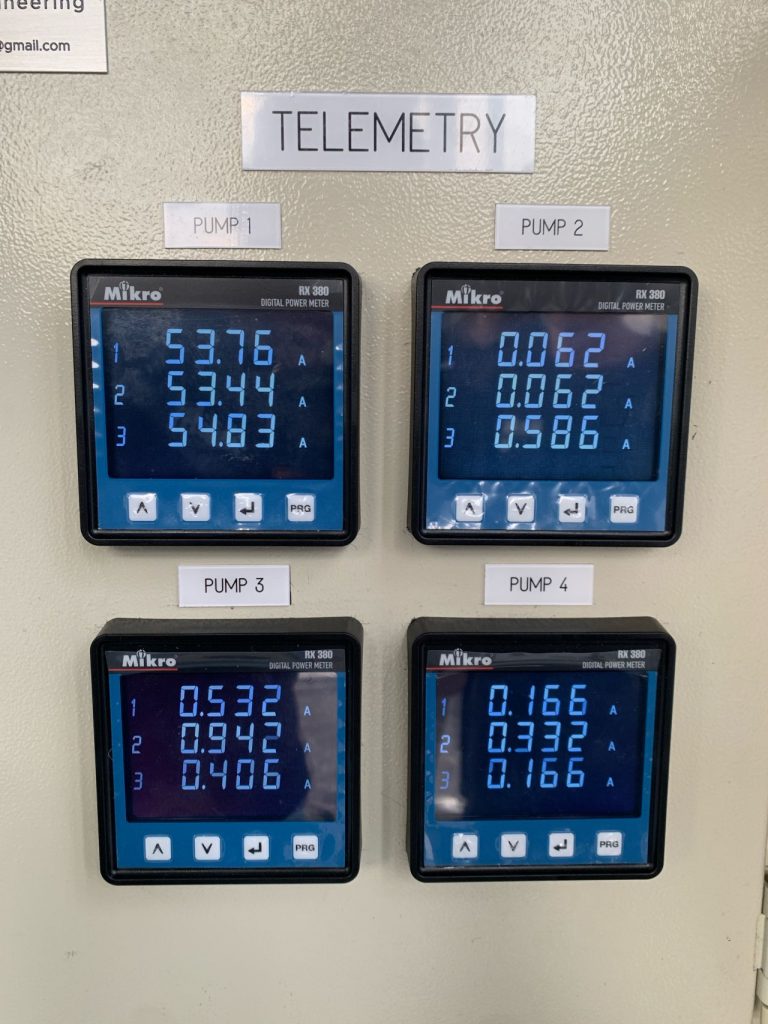
To measure the electrical health of the pump motors, Current Transformers (CTs) were installed. These sensors continuously monitor current flow, providing critical insights into load conditions and potential anomalies.

“If you can see the current patterns, you can almost predict the future behaviour of the motor.”

Connectivity is handled by the Teltonika RUT200 Industrial Router, ensuring stable and secure communication between the on-site system and the cloud. In environments like airports, reliability is not optional. It is mandatory.

To safeguard the system, protection components such as Surge Protection Devices (SPD), MCBs, and fuses were integrated. These ensure that electrical disturbances do not damage the system or compromise operations.

All components are structured neatly using terminal blocks and utility sockets, making maintenance and troubleshooting easier.

But hardware alone does not solve the problem.

Where Data Becomes Insight: The Role of Favoriot

This is where the system moves from being “connected” to being “intelligent.”

Favoriot acts as the central platform that transforms raw data into something meaningful.

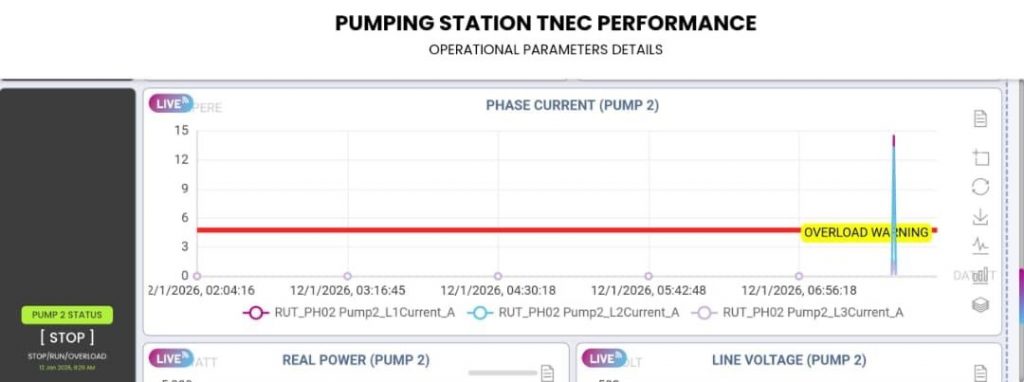
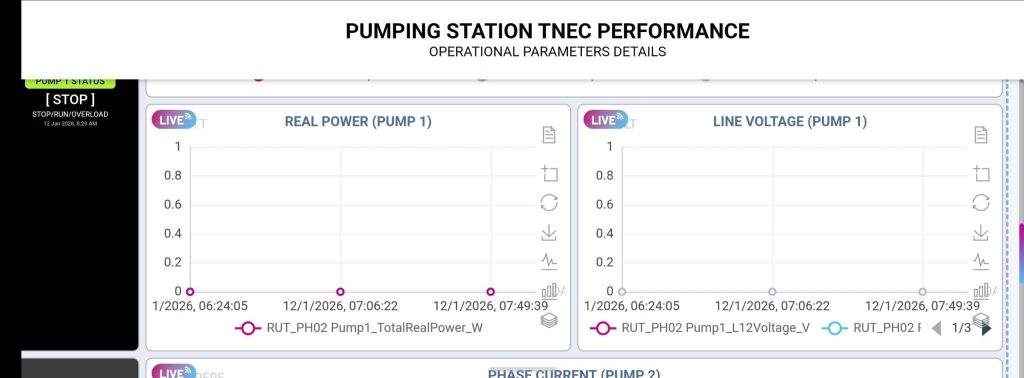
Data collected by the PLC is transmitted to the cloud, where Favoriot processes and visualises it in real time. Maintenance teams can now see exactly what is happening on the ground without being physically present.

Instead of static readings, they get dynamic trends.

Instead of guesswork, they get clarity.

Real-Time Visibility

Operators can monitor current load patterns in real time. Any unusual spikes or drops become immediately visible.

Alerts That Matter

Thresholds can be set so that when conditions go beyond acceptable limits, alerts are triggered instantly. No waiting. No delays.

Historical Analysis

Over time, data builds a story. Patterns emerge. Trends become clear. Teams can identify early signs of wear or inefficiency.

“This is not just monitoring. This is understanding behaviour.”

Remote Access

Engineers no longer need to be on-site to know what’s happening. The system can be accessed from anywhere, enabling faster decision-making.

Scalability

The same architecture can be extended to monitor additional assets across the airport. One system. Multiple use cases.

The Shift That Changes Everything

Before this system, monitoring was reactive.

Something fails. Then action is taken.

After implementing the IoT solution, the approach becomes proactive.

Something starts to behave abnormally. Action is taken before failure happens.

This shift may sound simple, but its impact is significant.

Measurable Impact on Operations

The deployment of this system has led to several tangible outcomes:

Continuous Operational Visibility

Maintenance teams now have a live view of motor performance at all times. No blind spots.

Reduced Downtime

Early detection means issues are addressed before they escalate into failures.

Better Asset Protection

Electrical faults can be identified early, reducing the risk of damage to expensive equipment.

Improved Maintenance Efficiency

Teams spend less time on routine checks and more time on meaningful interventions.

Data-Driven Decisions

Decisions are no longer based on assumptions. They are backed by real data.

“We are no longer guessing. We are acting based on evidence.”

Why This Matters Beyond One Airport

This project is not just about water pumps.

It represents a broader shift in how organisations manage critical infrastructure.

Many industries still operate with limited visibility into their assets. Data exists, but it is fragmented, delayed, or underutilised.

IoT changes that.

But more importantly, platforms like Favoriot ensure that the data is not just collected, but actually used.

Because in the end, value does not come from data.

It comes from decisions.

A Blueprint for Intelligent Infrastructure

The collaboration between Macht Engineering and Favoriot offers a practical blueprint:

  1. Start with a clear operational problem
  2. Capture the right data using reliable hardware
  3. Ensure secure and stable connectivity
  4. Use a platform that turns data into actionable insights
  5. Focus on outcomes, not just dashboards

“Are we building systems that look good… or systems that actually make a difference?”

That question is worth asking in every IoT project.

Moving Forward

As airports and other critical facilities continue to modernise, the demand for intelligent monitoring systems will only grow.

What Macht Engineering has implemented is not just a solution for today. It is a foundation for future expansion, including predictive analytics and AI-driven maintenance.

And it all starts with visibility.

If you are still relying on manual monitoring or disconnected systems, it may be time to rethink your approach.

Because the difference between reacting and predicting can determine the reliability of your entire operation.

If you are exploring how to implement similar IoT solutions in your organisation, reach out to Favoriot to learn how you can turn your operational data into real-time, actionable intelligence.

[Photo Credit to Mach Engineering]

Mahalakshmi Tech Campus (MTC), India

Malaysia’s Favoriot and Mahalakshmi Tech Campus Partner, India to Drive IoT and AI Innovation in India

March 31st, 2026 Posted by BLOG, Internet of Things, IOT PLATFORM, PARTNER, Press Release 0 thoughts on “Malaysia’s Favoriot and Mahalakshmi Tech Campus Partner, India to Drive IoT and AI Innovation in India”

News Announcement

Favoriot and Mahalakshmi Tech Campus Sign Strategic MoU to Advance IoT, AI, and Smart Campus Innovation

Puchong, Malaysia / Chennai, India, 27 March 2026Favoriot Sdn. Bhd., a leading AIoT platform provider, has formalised a strategic collaboration with Mahalakshmi Tech Campus (MTC) in India through the signing of a Memorandum of Understanding (MoU) to accelerate innovation in the Internet of Things (IoT), Artificial Intelligence (AI), and smart campus development.

The partnership marks a significant step toward bridging academia and industry, with both organisations committed to nurturing future-ready talent and advancing applied research in emerging technologies.

Under this collaboration, Favoriot will provide access to its IoT platform, technical expertise, and training resources, while MTC will facilitate infrastructure, student engagement, and academic integration. Together, both parties aim to create a dynamic ecosystem where students, researchers, and faculty can develop real-world solutions using cutting-edge technologies.

The MoU outlines a shared vision to strengthen capabilities in IoT, smart cities, data analytics, and AI, while enabling hands-on learning experiences through practical deployments and collaborative projects. This includes establishing IoT laboratories and smart campus initiatives powered by real-time data applications.

The agreement, valid for three years, sets the foundation for joint research, curriculum enhancement, faculty development, and student training programs, reinforcing the role of academia-industry collaboration in shaping the next generation of digital innovators.

This partnership reflects Favoriot’s ongoing commitment to expanding its global ecosystem through meaningful collaborations that translate technology into impactful, real-world outcomes.

[This photo was taken on Oct. 19, 2018, when Prof. Dr Ushaa visited Favoriot for the first time]

Copyright © 2026 All rights reserved