Subject: Revocation of Malaysia Digital (MD) Status
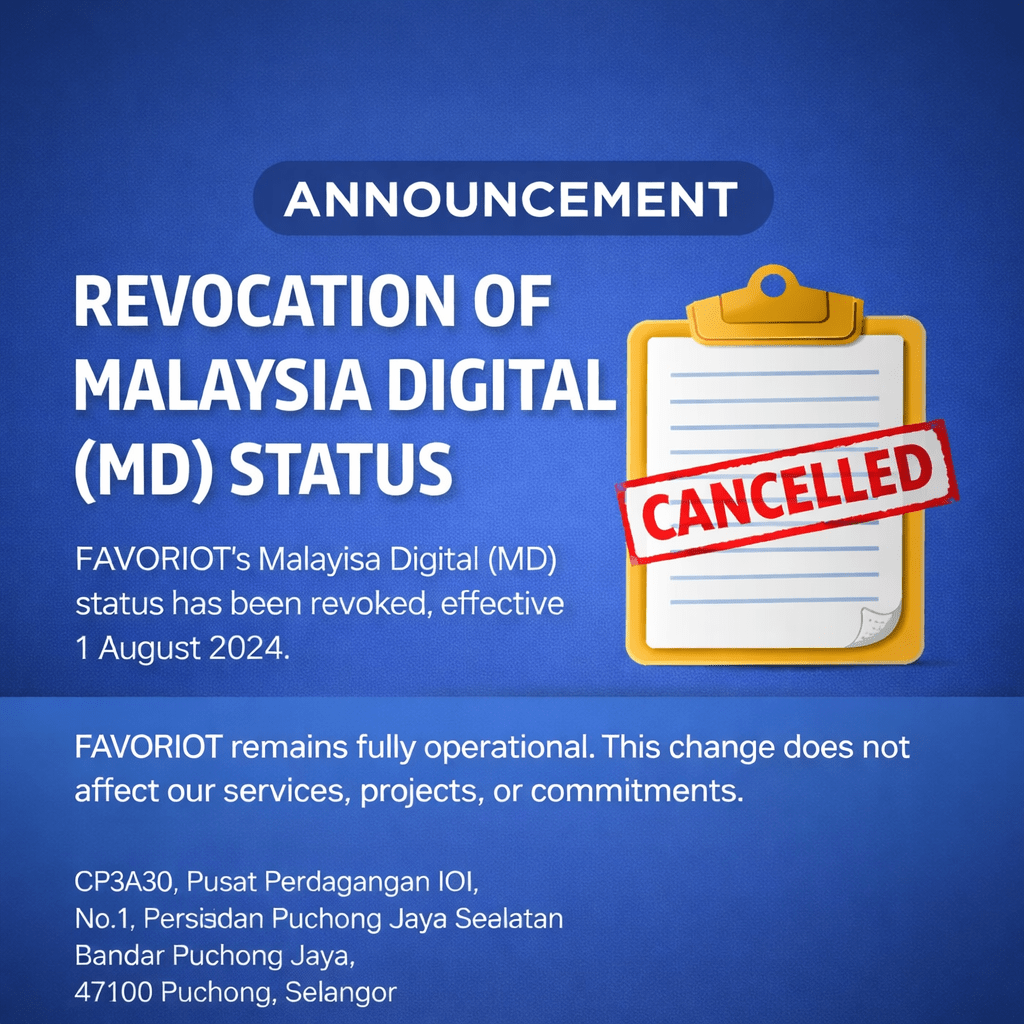
FAVORIOT Sdn. Bhd. hereby acknowledges the formal notification issued by Malaysia Digital Economy Corporation Sdn. Bhd. (MDEC) dated 20 February 2026 regarding the revocation of the Company’s Malaysia Digital (MD) Status.
The letter, referencing BSD-BSS-LTR-MDCC-MDC (MD File ID: MD/0000184), states that the Malaysia Digital Status previously granted to FAVORIOT Sdn. Bhd. on 2 August 2023 has been revoked with effect from 1 August 2024. As outlined in the notice, the Company is no longer entitled to the benefits, incentives, privileges, or the use of the Malaysia Digital (MD) logo, effective from the date of revocation.
FAVORIOT respects MDEC’s decision and confirms that we will fully comply with all directives stated in the official correspondence.
We would like to assure our partners, customers, stakeholders, and the broader ecosystem that this administrative status change does not affect:
Our operational continuity
Our contractual obligations to clients
Our ongoing projects and platform services
Our commitment to delivering high-quality IoT and AIoT solutions
FAVORIOT remains fully operational and continues to focus on strengthening its technology offerings, expanding partnerships locally and internationally, and supporting customers across industries such as smart cities, agriculture, manufacturing, logistics, and education.
We remain committed to contributing to Malaysia’s digital economy and advancing the adoption of Internet of Things and AI-driven solutions through our platform, training programs, and ecosystem initiatives.
We thank our stakeholders for their continued trust and support.
For any further clarification, please contact us directly at:
FAVORIOT Sdn. Bhd. CP3A30, Pusat Perdagangan IOI No.1, Persiaran Puchong Jaya Selatan Bandar Puchong Jaya 47100 Puchong, Selangor
Issued by: Management of FAVORIOT Sdn. Bhd. Date: 23 February 2026
February 11th, 2026 Posted by favoriotadminBLOG 0 thoughts on “From Alarms to Insight: How Platforms Like Favoriot Enable Smarter Gas Safety”
Executive Summary
Many industrial workplaces expose workers to hazardous gases that are invisible and difficult to detect without proper instrumentation. Even short exposure beyond safe limits can cause serious injury or long-term health issues. Traditional gas monitoring systems rely mainly on threshold alarms that activate only when conditions become dangerous. While this approach supports compliance, it offers limited help in preventing incidents.
Smart gas monitoring combines safety-grade gas sensors, continuous data collection, and machine learning techniques to strengthen worker protection and compliance. By learning patterns and trends instead of reacting only to fixed limits, organisations gain earlier warnings, clearer insight, and better control through a cloud-based IoT platform.
Why Gas Monitoring Remains a Safety Challenge
Industrial gas hazards are difficult to manage because they are:
Intermittent and location-dependent
Influenced by ventilation, temperature, humidity, and work activity
Dangerous even at relatively low concentrations
Especially critical in confined or enclosed spaces
Common limitations of conventional gas monitoring include:
Alarms are triggered only after limits are exceeded
Minimal use of historical data
Repeated alarms without a clear root cause
Nuisance alerts that reduce worker trust
Meeting regulatory limits alone does not always translate into safer operations.
A Typical Smart Gas Monitoring Scenario
In a typical facility such as a factory, processing plant, or utility site, fixed gas sensors are installed across key areas, including:
Production and processing zones
Utility and equipment rooms
Storage and loading areas
Confined or enclosed spaces
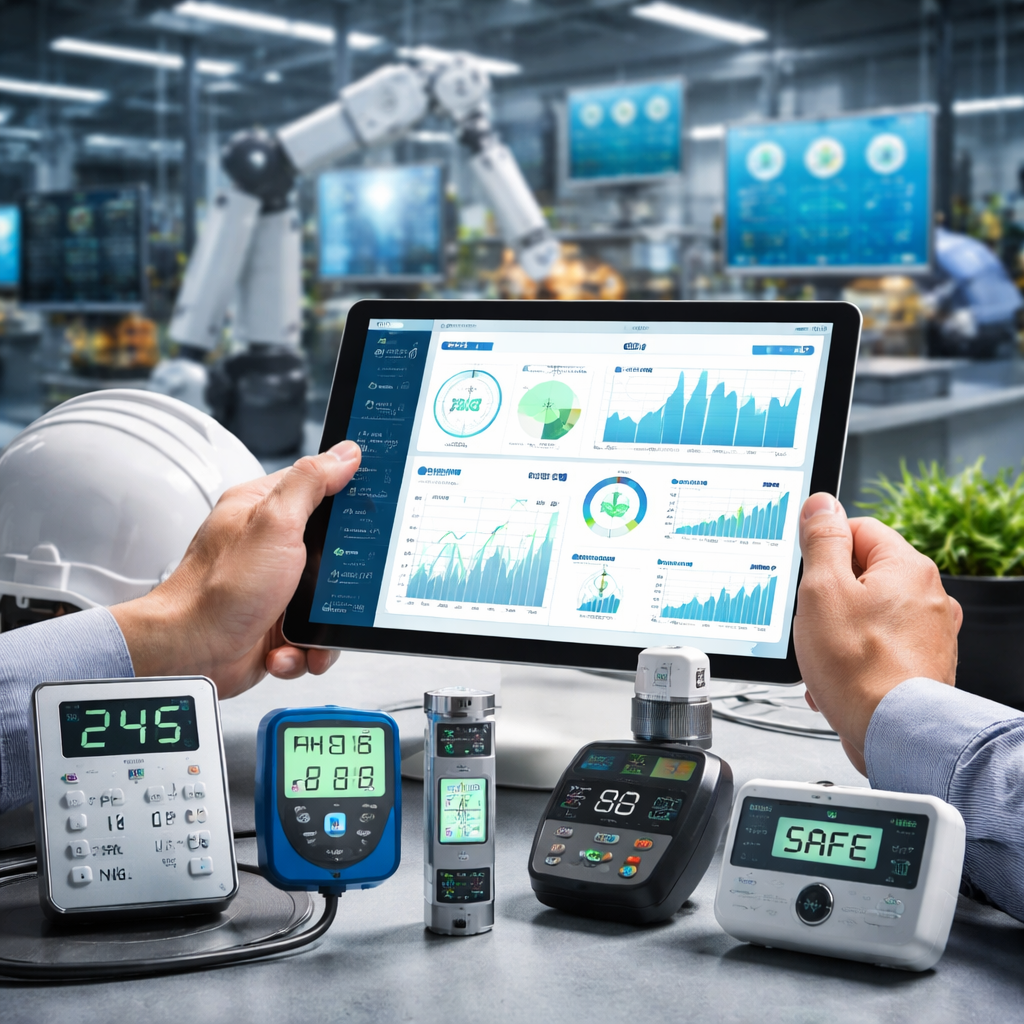
These sensors continuously measure hazardous gas concentrations and support environmental conditions such as temperature and humidity. The sensors are calibrated for occupational use and generate time-stamped data that reflects both routine operations and abnormal situations.
System Architecture Overview
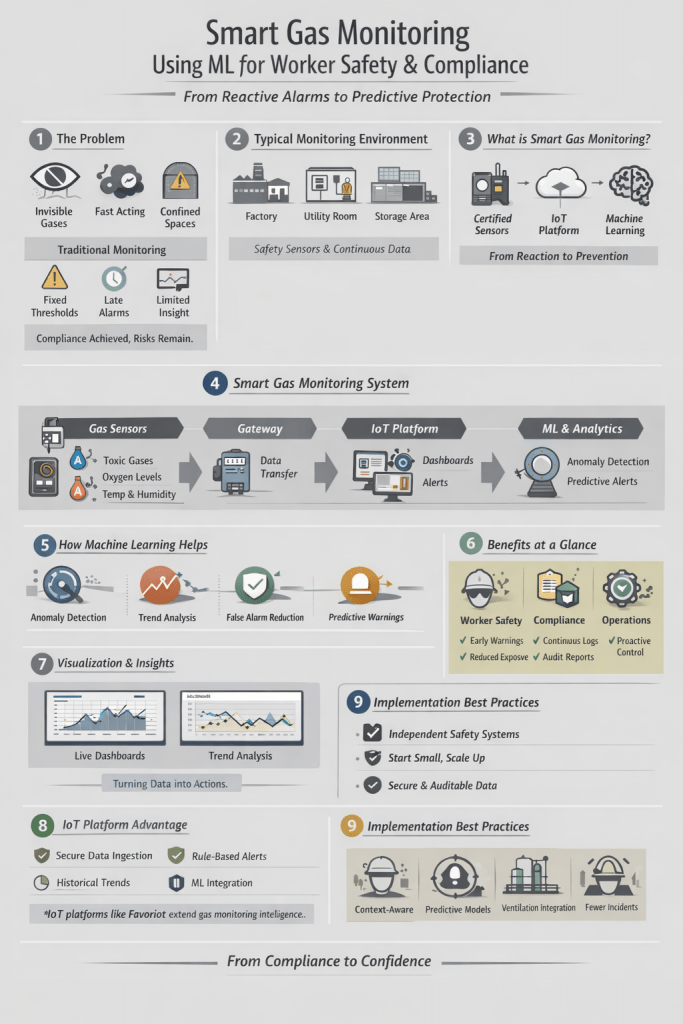
A smart gas monitoring solution typically follows a layered approach:
Gas sensors continuously capture readings
A gateway aggregates data and handles secure transmission
A cloud IoT platform stores and visualises information
An analytics layer applies rules and machine learning models
Alerts, dashboards, and reports support timely decisions
This structure allows safety-critical detection to remain independent while enabling higher-level insight and analysis.
How Machine Learning Enhances Gas Monitoring
Machine learning shifts gas monitoring from simple limit checking to behavioural understanding.
Instead of asking:
“Has the threshold been exceeded?”
The system can ask:
“Is this behaviour unusual for this location and time?”
Key ML-driven capabilities include:
Anomaly detection Identifies unusual gas patterns even when readings remain within safe ranges
Trend analysis Highlights gradual increases that may signal leaks, ventilation issues, or process degradation
Reduced false alarms Distinguishes short-term spikes from genuine risks
Predictive alerts Estimates the likelihood of a future alarm based on current trends
These capabilities allow safety teams to act earlier and with greater confidence.
Benefits for Safety, Compliance, and Operations
A smart gas monitoring approach delivers value across several areas.
For worker safety:
Earlier warnings reduce exposure risk
Better visibility across zones and shifts
Improved readiness for confined space work
For compliance:
Continuous, auditable gas exposure records
Easier preparation for inspections and audits
Clear evidence of proactive risk management
For operations:
Root cause analysis of recurring incidents
Insight into ventilation and process performance
Data-supported improvements rather than guesswork
Visualisation and Decision Support
Modern IoT platforms turn raw sensor readings into practical insight through:
Real-time dashboards by zone and gas type
Historical charts for exposure and trend review
Alert timelines linked to operational activity
Platforms such as Favoriot provide a practical environment for ingesting sensor data via common protocols, configuring rule-based alerts, visualising trends, and supporting machine learning workflows. This allows organisations to begin monitoring and progressively introduce predictive insights without replacing existing safety-certified equipment.
Teams that already operate gas sensors can consider connecting selected data streams to an IoT platform to gain visibility, historical insights, and early-warning capabilities with minimal disruption.
Key Implementation Considerations
Successful deployment depends on a few important principles:
Clear separation of roles Safety-certified sensors handle detection and alarms, while the IoT and ML layer focuses on insight and prediction
Scalable rollout Begin with high-risk areas, then expand coverage as data volume and confidence grow
Data security and integrity Secure communication, access control, and audit trails are essential for trust
This approach supports progress without introducing compliance risk.
The Road Ahead
Smart gas monitoring is evolving toward systems that are:
Context-aware and adaptive
Integrated with ventilation and facility systems
Linked to maintenance and operational planning
Increasingly predictive as data accumulates
As machine learning models mature, safety teams can prevent incidents rather than respond after they occur.
Conclusion
Gas monitoring no longer needs to stop at alarms. By combining safety-grade sensors, continuous data collection, and machine learning, organisations can protect workers more effectively while strengthening compliance and operational understanding.
A cloud-based IoT platform with analytics and ML capability offers a practical path toward proactive safety. Organisations looking to move beyond basic monitoring may consider connecting their gas monitoring systems to platforms such as Favoriot to gain deeper insight, earlier warnings, and a stronger foundation for intelligent safety management.
ESG is no longer driven by intention statements or annual summaries. Today, organisations are expected to show evidence. Regulators want proof. Investors want consistency. Customers want transparency.
At the centre of this shift sits one critical enabler: IoT.
IoT transforms ESG reporting from a compliance obligation into an operational capability by capturing real-world data directly from assets, facilities, and environments. Without this layer of measurement, ESG metrics are often based on assumptions rather than facts.
ESG Needs Measured Reality, Not Estimates
Many organisations still depend on:
Periodic meter readings
Manual logs
Spreadsheets are updated once a quarter or once a year
These methods struggle to survive audits and increasingly fall short of modern disclosure expectations. ESG today demands data that is:
Continuous
Verifiable
Traceable to source
IoT fills this gap by collecting information automatically, consistently, and in real time.
How IoT Supports Each ESG Pillar
Environmental: Where IoT Plays the Largest Role
Environmental indicators are the most measurable and the most scrutinised. IoT enables direct monitoring of key environmental metrics such as:
Energy usage
Electricity consumption by machine, line, or facility
Peak demand and load behaviour
Renewable energy contribution
Emissions and air quality
CO₂ concentration
Particulate matter
Indoor air quality in controlled spaces
Water consumption
Inflow and discharge volumes
Leak detection
Process water usage
Waste tracking
Waste volumes
Recycling rates
Hazardous material handling
These measurements underpin carbon accounting, energy intensity reporting, and environmental risk management.
Social: Protecting People Through Data
IoT contributes to the Social pillar by improving visibility into workplace conditions, especially in operational environments.
Typical applications include:
Monitoring temperature and humidity on production floors
Detecting gas leaks or unsafe exposure levels
Identifying equipment conditions that could lead to accidents
In sectors such as manufacturing, construction, and energy, these indicators are closely linked to legal and ethical responsibilities.
Governance: Building Trust Through Data Integrity
Governance is not measured by sensors, but it depends on the quality of the data behind decisions.
IoT strengthens governance by:
Reducing manual intervention in data collection
Creating time-stamped, tamper-resistant records
Supporting audit readiness with clear data trails
When ESG figures are backed by operational data, governance moves from declarations to defensible accountability.
What ESG Monitoring Is Commonly Expected
While ESG rules vary by country and industry, several monitoring areas are widely treated as baseline requirements.
Area
ESG Pillar
Why It Matters
Energy consumption
Environmental
Carbon and efficiency metrics
Emissions data
Environmental
Climate-related disclosures
Water usage
Environmental
Resource risk and compliance
Pollution indicators
Environmental
Regulatory and community impact
Worker safety metrics
Social
Duty of care
Data traceability
Governance
Audit credibility
Organisations lacking reliable data in these areas often face delays, higher audit costs, and increased scrutiny.
Example: ESG Monitoring in a Manufacturing Factory
Consider a medium-sized factory operating multiple production lines.
Environmental Monitoring
Smart meters track electricity usage at:
Incoming power supply
Individual production lines
High-energy equipment such as compressors
Water flow sensors monitor:
Process water consumption
Cooling systems
Discharge points
Air quality sensors measure:
Indoor CO₂ levels
Particulate concentration
Ventilation effectiveness
This setup allows the factory to calculate energy intensity per unit produced, detect abnormal consumption early, and support environmental reporting with confidence.
Social Monitoring
Temperature and humidity sensors ensure safe working conditions
Gas detectors provide early alerts before exposure becomes dangerous
Equipment monitoring helps reduce accidents caused by malfunctioning machinery
This gives management visibility not just into outcomes, but also into actions taken when issues arise.
Turning IoT Data into ESG Insight
Raw sensor data alone is not enough. It must be structured, contextualised, and aligned with ESG indicators.
This is where an IoT platform becomes essential. Platforms like Favoriot help organisations manage data from multiple sensors, locations, and systems while presenting ESG-relevant insights through dashboards, alerts, and historical views. This makes ESG monitoring scalable across factories, buildings, and regions without adding operational complexity.
Closing Thoughts
ESG expectations continue to rise, and tolerance for estimates is shrinking.
IoT provides the foundation for:
Measurable environmental performance
Safer workplaces
Stronger governance backed by evidence
For organisations serious about ESG, monitoring is no longer optional. It is the starting point for trust, accountability, and long-term credibility.