
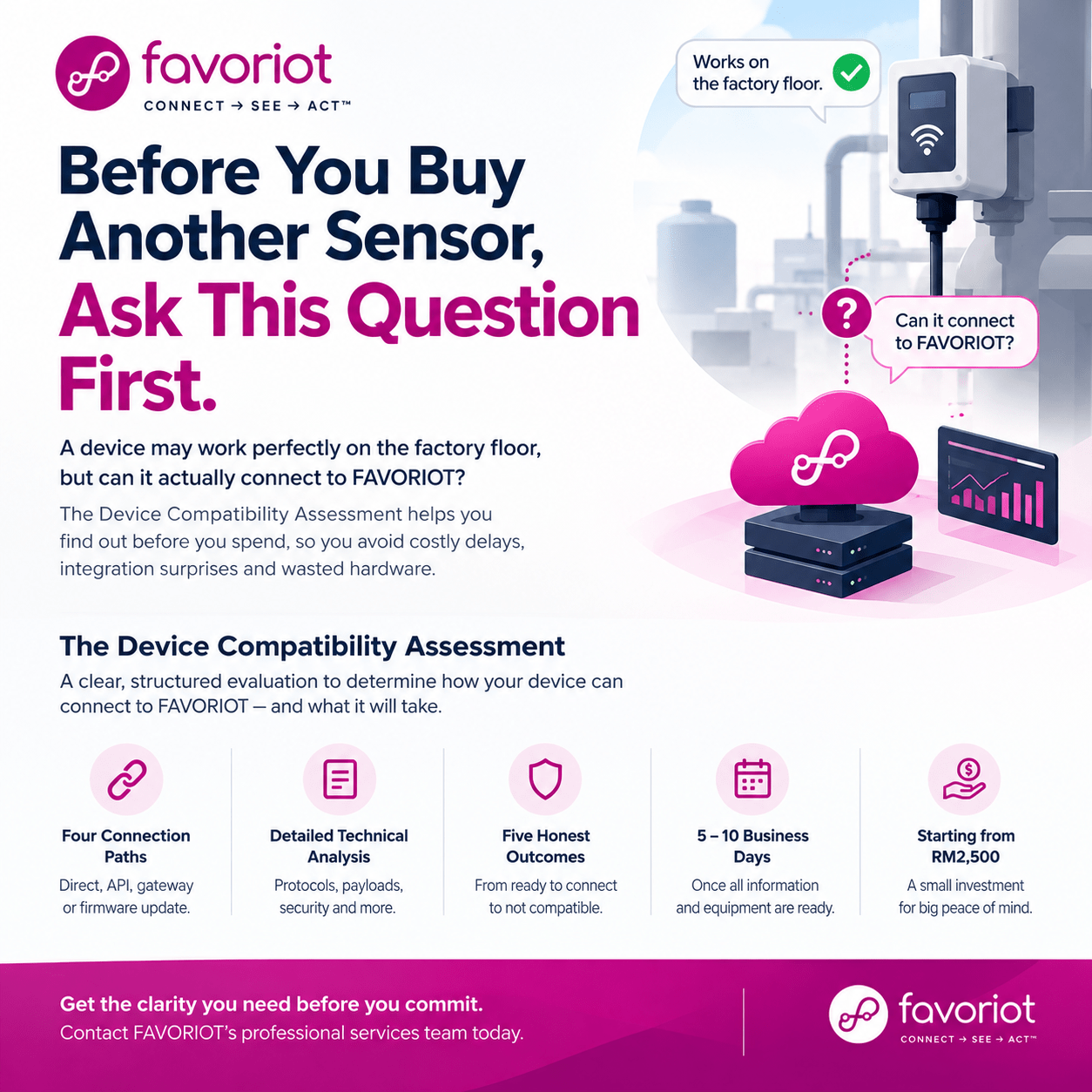
Most IoT budgets get spent in the wrong order. A company decides it wants visibility into a process, picks a sensor or a piece of equipment that looks right on paper, and only afterward starts asking whether the thing can actually talk to a platform. By then the purchase order is signed, the vendor has been paid, and someone on the technical team is quietly trying to figure out why a device that works perfectly on the factory floor refuses to send a single reading anywhere useful.
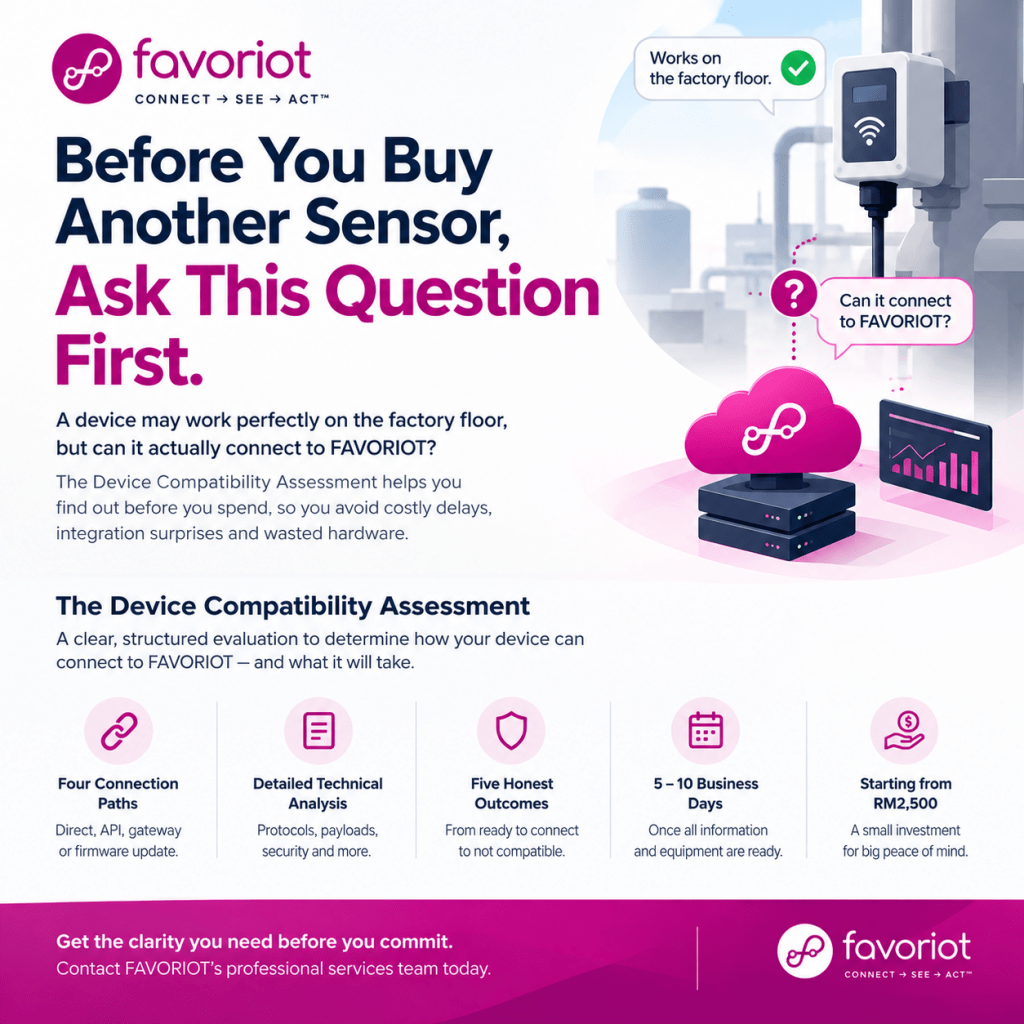
FAVORIOT has now built a service specifically to catch this problem before it becomes an expensive discovery: the Device Compatibility Assessment.
The Gap Between “It Works” and “It Connects”
A device functioning correctly and a device being ready to integrate are two different things, and the difference is rarely obvious until someone tries to bridge them. A sensor might use a proprietary protocol nobody documented. A machine’s PLC might expose data only through a vendor API that requires credentials nobody thought to request. An older piece of equipment might need a firmware update just to speak a language the rest of the system understands.
None of this shows up in a product brochure. It shows up weeks into a project, usually after budget has already been committed to hardware, and usually as a delay nobody planned for.
What the Assessment Actually Determines
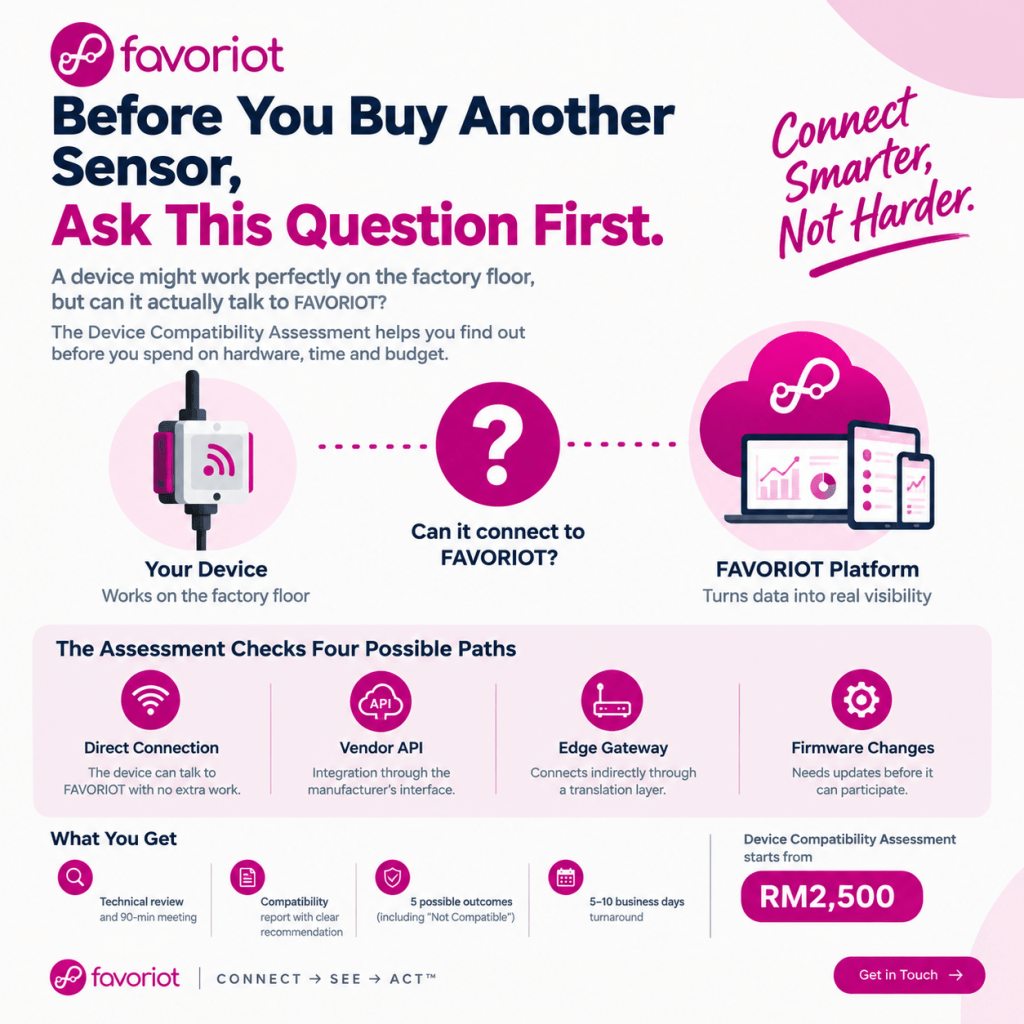
The Device Compatibility Assessment exists to answer one specific question before any commitment is made: can this device connect to FAVORIOT, and if so, how? The assessment looks at four possible paths:
- Direct connection – the device can talk to FAVORIOT with no extra work.
- A documented vendor API – integration happens through the manufacturer’s own interface.
- An edge gateway or protocol converter – the device connects indirectly through a translation layer.
- Firmware changes – the device needs updates before it can participate at all.
Each assessment covers one clearly defined configuration, meaning one manufacturer, model, and firmware version, tested against one communications method. That narrow scope is deliberate. A tighter assessment produces a clearer answer than a broad one that tries to cover too much ground at once.
What’s Involved on Both Sides
The process works best as a two-way exchange of information rather than a black box exercise. On FAVORIOT’s side, the assessment includes a remote review, a technical meeting of up to 90 minutes, a review of protocols and payload structure, a look at authentication and security requirements, and a written compatibility report at the end.
On the customer’s side, a few things need to be ready before the clock starts:
- The exact brand, model, and firmware version of the device in question
- Datasheets and configuration manuals
- Protocol, API, and payload documentation
- Administrative access and a vendor contact, where relevant
- A working test device, when physical testing is needed
- Remote access, if a live connection attempt is required
Skipping any of these does not stop the assessment from happening, but it usually stretches the timeline out.
Five Honest Outcomes, Not One Optimistic One
What makes this service worth paying for is that it does not promise a yes. Every assessment ends in one of five clearly labeled outcomes: Ready for direct connection, API Ready through a documented vendor interface, Gateway Ready via a converter, Conditional pending vendor cooperation or firmware work, or Not Currently Compatible due to insufficient access, documentation, or a safe connection route.
That last category matters as much as the first. A report that says a device will not work right now, and explains exactly why, saves far more money than a vague assurance that everything will probably be fine. It also gives a technical team something concrete to bring back to a vendor, rather than a shrug.
Turnaround runs five to ten business days once all required information and equipment are in hand, and the assessment fee applies regardless of which of the five outcomes comes back. That detail is worth stating plainly rather than burying in fine print: the value of the service is the clarity itself, not a guaranteed green light.
Where This Fits Into a Bigger Decision
Not every organisation needs this service. A team that already knows its device inventory speaks MQTT or REST and has the documentation to prove it can likely skip straight to integration. But for anyone standing at the start of a deployment with a mix of legacy equipment, newly purchased sensors, and a deadline that assumes everything will just work, an assessment starting at RM2,500 is a small line item compared to the cost of finding out the hard way, mid-project, that a device was never going to connect at all.
Organisations weighing a new IoT deployment, or trying to make sense of equipment they already own, are welcome to reach out to FAVORIOT‘s professional services team (or contact info@favoriot.com ) to see whether this is the right first step.