Posts tagged "Mazlan Abbas"

Key Success Factors and Challenges in IoT Implementation

February 3rd, 2025 Posted by BLOG, Internet of Things, IOT PLATFORM 0 thoughts on “Key Success Factors and Challenges in IoT Implementation”

Today, we’ll explore the key success factors for implementing IoT in any organisation while addressing the common challenges faced during this process.

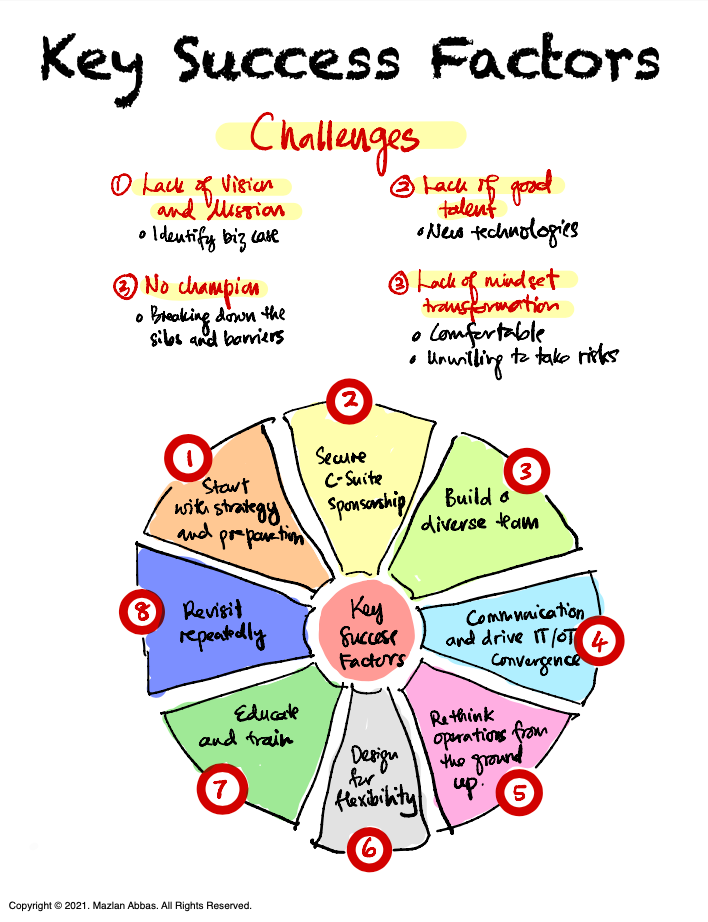
The diagram gives us a clear roadmap, so let’s break it down into challenges and success factors.
Based on the eBook — IoT Notes by Mazlan Abbas

Part 1: Challenges in IoT Implementation

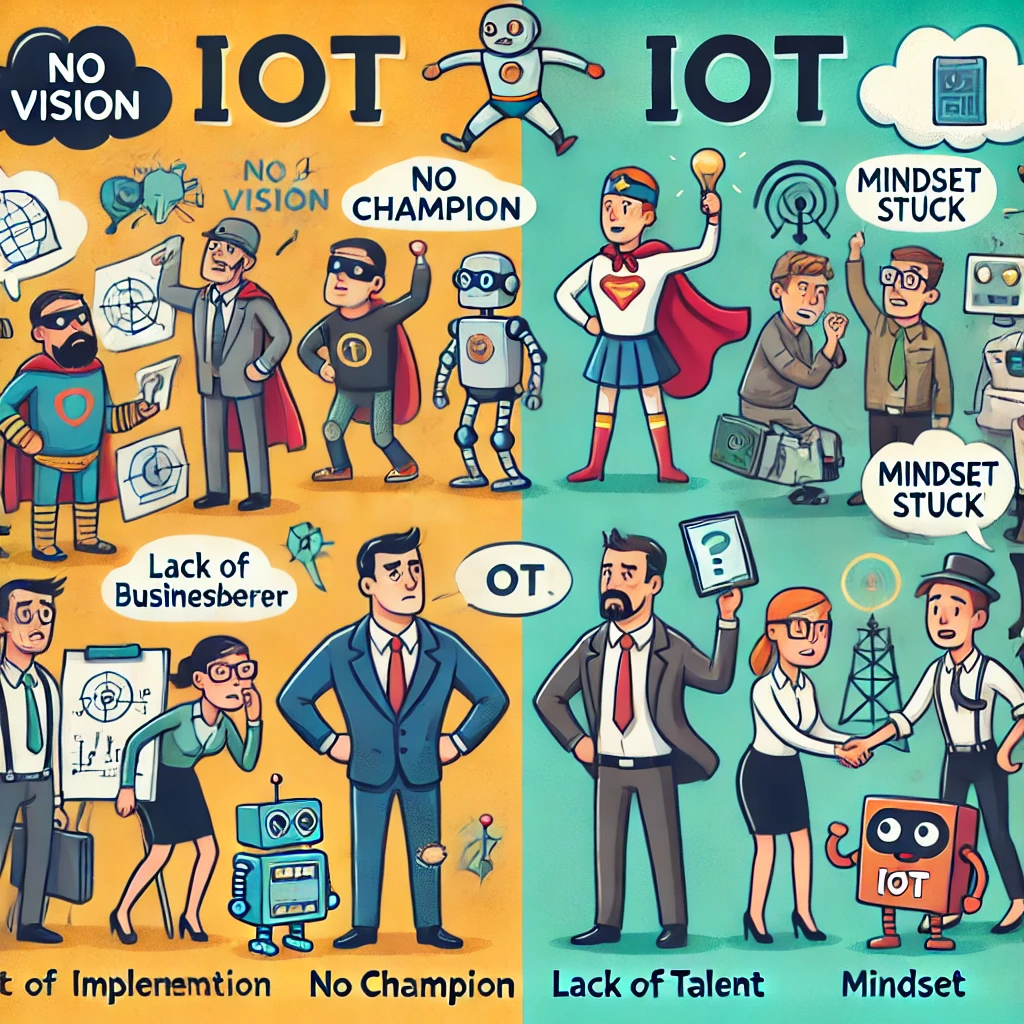
Before diving into the success factors, let’s address the challenges often preventing organisations from achieving IoT success. There are four main challenges:

1. Lack of Vision and Mission

  • Organisations often struggle to identify the business case for IoT.
  • Without a clear vision, it’s hard to prioritise IoT initiatives and allocate resources effectively.

2. No Champion

  • A key challenge is the absence of a leader who can break down silos and drive collaboration across departments.
  • Without someone championing the cause, IoT projects may lack direction and momentum.

3. Lack of Good Talent

  • IoT requires expertise in new technologies like sensors, networks, and data analytics.
  • The shortage of skilled professionals can slow down IoT adoption.

4. Lack of Mindset Transformation

  • Organisations often get too comfortable with their existing processes.
  • Employees and leaders may be unwilling to take risks or embrace the cultural shift needed for IoT transformation.

Part 2: Key Success Factors for IoT Implementation

To overcome these challenges, organisations should focus on eight key success factors. These are the building blocks for a successful IoT strategy:

1. Start with Strategy and Preparation

  • Define a clear strategy that aligns with the organisation’s goals.
  • Prepare by understanding the needs, potential benefits, and risks of IoT.

2. Secure C-Suite Sponsorship

  • Gaining buy-in from top leadership ensures resources and support for IoT initiatives.
  • This sponsorship also drives accountability and alignment across teams.

3. Build a Diverse Team

  • A successful IoT team should include experts from different fields, such as technology, operations, and business.
  • A diverse team ensures all perspectives are considered.

4. Communication and IT/OT Convergence

  • Foster assertive communication between IT (Information Technology) and OT (Operational Technology) teams.
  • This convergence ensures the smooth integration of IoT systems with existing workflows.

5. Rethink Operations from the Ground Up

  • Don’t just digitise existing processes; redesign workflows to leverage IoT’s capabilities fully.
  • Focus on creating more agile and efficient operations.

6. Design for Flexibility

  • Build IoT systems that can adapt to future changes, such as scaling up or integrating new technologies.
  • Flexibility ensures long-term success.

7. Educate and Train

  • Provide ongoing education and training for employees to build confidence in IoT tools and systems.
  • Skilled employees are key to maximising IoT’s potential.

8. Revisit Repeatedly

  • IoT is not a one-time project; it’s an ongoing journey.
  • Regularly revisit your strategy, evaluate outcomes, and adjust as needed.

Key Takeaways

To succeed in IoT implementation:

  1. Address challenges like lack of vision, leadership, talent, and mindset.
  2. Focus on success factors like clear strategy, leadership support, diverse teams, communication, and ongoing education.

Discussion Question: Which challenges or success factors resonate most with your organisation? What steps can you take to improve your IoT implementation strategy? Let’s discuss it!

[Download — IoT Notes by Mazlan Abbas]

[Originally published from here]

Examples of IoT Applications and Their Benefits

January 23rd, 2025 Posted by BLOG 0 thoughts on “Examples of IoT Applications and Their Benefits”

Today, let’s look at some real-world examples of IoT applications and their benefits.

This diagram focuses on two industries—transportation and logistics and Oil and gas —to illustrate how IoT solutions can reduce costs and improve efficiency. Let’s examine each example in detail.

1. Transportation & Logistics

In this industry, IoT solutions are used to improve the management of vehicles and delivery systems.

IoT Solution:

  • Sensors are installed in vehicles to provide real-time data on their state and performance.
  • These sensors report on engine health, location, and delivery progress.

Benefits (Payback):

Cost Savings:

  • Reduces truck operation and delivery costs by identifying and addressing maintenance issues early.
  • Minimises fuel consumption by optimising delivery routes.

Improved Efficiency:

  • Reduces delivery disruptions and delays.
  • Ensures on-time deliveries and improves overall logistics system performance.

Example in Action: A logistics company uses IoT-enabled fleet management to track delivery vehicles and proactively schedule maintenance, avoiding breakdowns and saving costs.

2. Oil & Gas

The Oil & Gas industry faces unique challenges that IoT can address by enhancing safety and efficiency.

IoT Solution:

  • Sensors are deployed throughout an oil rig to monitor critical components.
  • These sensors detect potential issues and provide operators with real-time alerts.

Benefits (Payback):

Cost Savings:

  • Increases safety by providing early and reliable warnings of potential equipment failures.
  • Prevents costly shutdowns by identifying problems before they escalate.

Improved Efficiency:

  • Real-time alerts enable quicker responses, reducing downtime and improving time-to-revenue.
  • Enhances asset utilisation by ensuring equipment operates optimally (4x improvement).
  • Complete data analysis allows for near real-time decision-making and operational adjustments.

Example in Action: An oil rig uses IoT sensors to monitor drill performance and prevent malfunctions, ensuring smoother operations and faster oil extraction.

Key Takeaways

IoT in Transportation & Logistics:

  • Reduces costs and enhances delivery efficiency through real-time monitoring of vehicles.

IoT in Oil & Gas:

  • Improves safety, reduces downtime, and maximises asset utilisation with real-time alerts and analysis.

Final Thought: IoT transforms industries by providing actionable data that saves money and improves efficiency. These examples show how IoT can adapt to specific industry needs and bring measurable benefits.

Discussion Question: Which other industries do you think can benefit from similar IoT solutions? Let’s brainstorm together!

[Download IoT Notes eBook for FREE]

Reasons to Consider IoT

January 17th, 2025 Posted by BLOG 0 thoughts on “Reasons to Consider IoT”

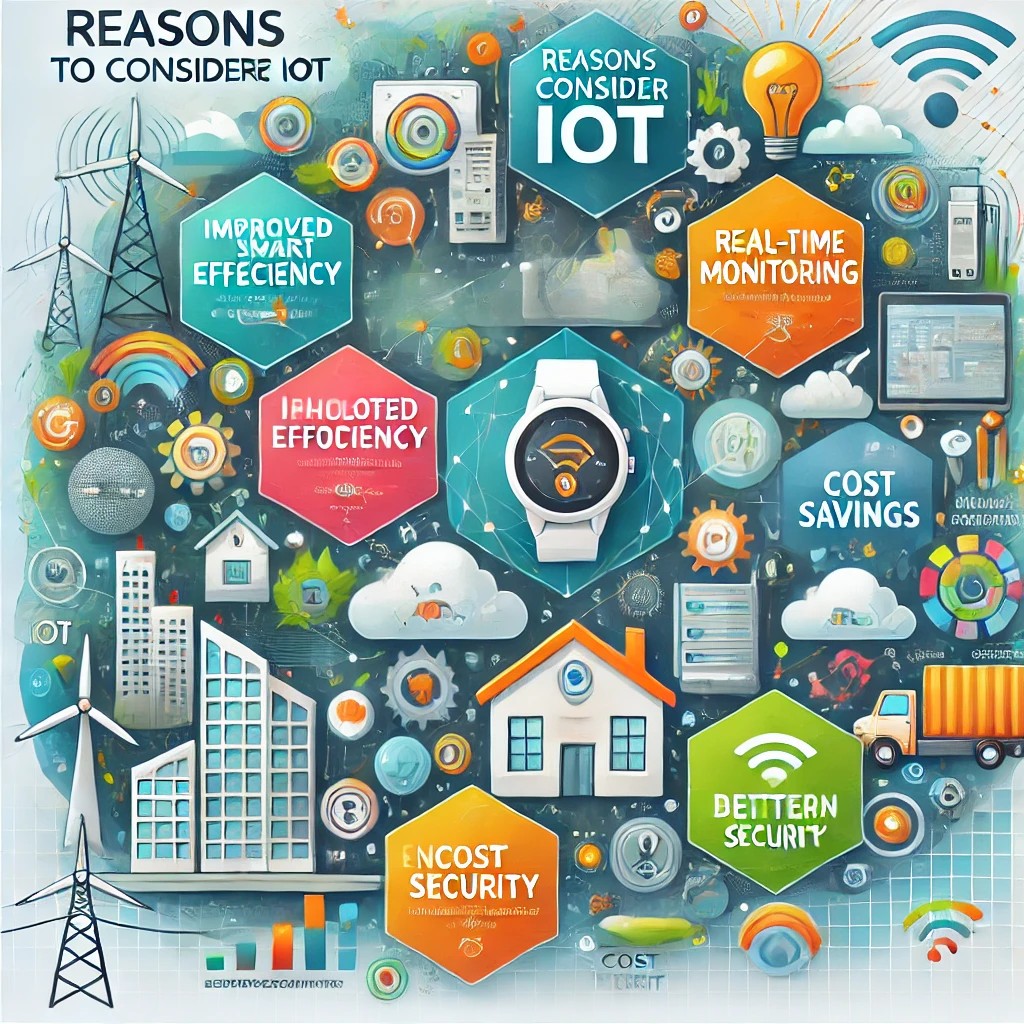
Today, we will discuss the key reasons why organisations should consider adopting IoT (Internet of Things).

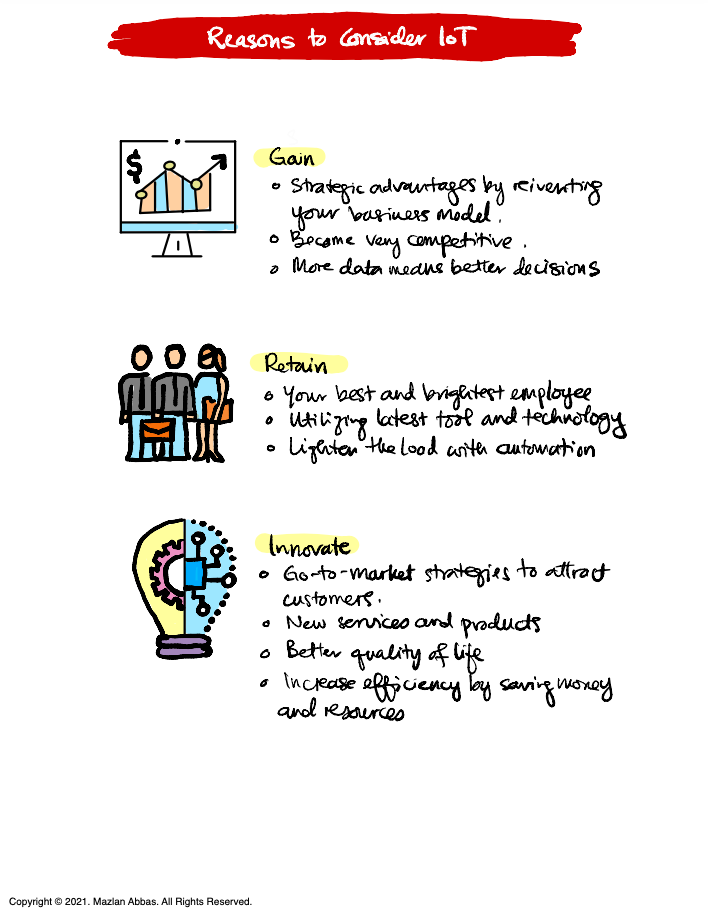
The diagram highlights three main benefits: Gain, Retain, and Innovate. Let’s go through each of these in a simple and structured way.

Base on eBook — IoT Notes by Mazlan Abbas

1. Gain

The first reason to consider IoT is the opportunity to gain strategic advantages and stay competitive in the market.

Strategic Advantages: IoT allows businesses to reinvent their business models, offering smarter, data-driven services.

  • Example: A retail store using IoT to track customer preferences and improve in-store experiences.

Become Competitive: By adopting IoT, businesses can stay ahead of competitors who are slow to embrace technology.

  • Example: A logistics company using IoT sensors to optimise delivery routes.

Data-Driven Decisions: IoT provides real-time data, which helps in making better decisions faster.

  • Example: A manufacturer monitoring equipment performance to reduce downtime.

2. Retain

The second reason is about retaining the best employees and maintaining operational efficiency.

Attract and Retain Talent: Employees prefer organisations that use the latest tools and technology to make their work easier and more efficient.

  • Example: Providing engineers with IoT-enabled tools to monitor and control operations remotely.

Ease Workloads with Automation: IoT automates repetitive tasks, allowing employees to focus on higher-value activities.

  • Example: Smart systems in a factory automatically managing inventory levels.

When employees feel supported by modern technology, they are more likely to stay with the organisation.

3. Innovate

The third and perhaps most exciting reason is the ability to innovate with IoT.

Go-to-Market Strategies: IoT enables businesses to develop new strategies to attract and retain customers.

  • Example: A car rental company using IoT for keyless entry and real-time vehicle tracking.

New Products and Services: IoT opens doors to create entirely new offerings that improve the customer experience.

  • Example: Wearable health trackers offering personalised fitness insights.

Better Quality of Life: For individuals and society, IoT can enhance convenience, safety, and overall well-being.

  • Example: Smart homes with automated lighting and security systems.

Efficiency and Savings: IoT reduces costs by optimising resources and processes.

  • Example: Smart irrigation systems saving water in agriculture.

Key Takeaway

The main takeaway is simple: IoT is not just about adopting technology — it’s about creating value by:

  1. Gaining a competitive edge.
  2. Retaining top talent and improving efficiency.
  3. Innovating to improve products, services, and quality of life.

IoT is the key to staying relevant in today’s fast-changing world.

Let’s discuss: Which of these reasons resonates most with your business or personal goals? How can IoT help you achieve them? Let’s explore together!

[Download the FREE eBook — IoT Notes by Mazlan Abbas]

Copyright © 2026 All rights reserved