Posts in IOT PLATFORM

Favoriot Use Case : Smart Environmental Museum Monitoring

October 1st, 2026 Posted by BLOG, HOW-TO, Internet of Things, IOT PLATFORM, Operational Blindness 0 thoughts on “Favoriot Use Case : Smart Environmental Museum Monitoring”

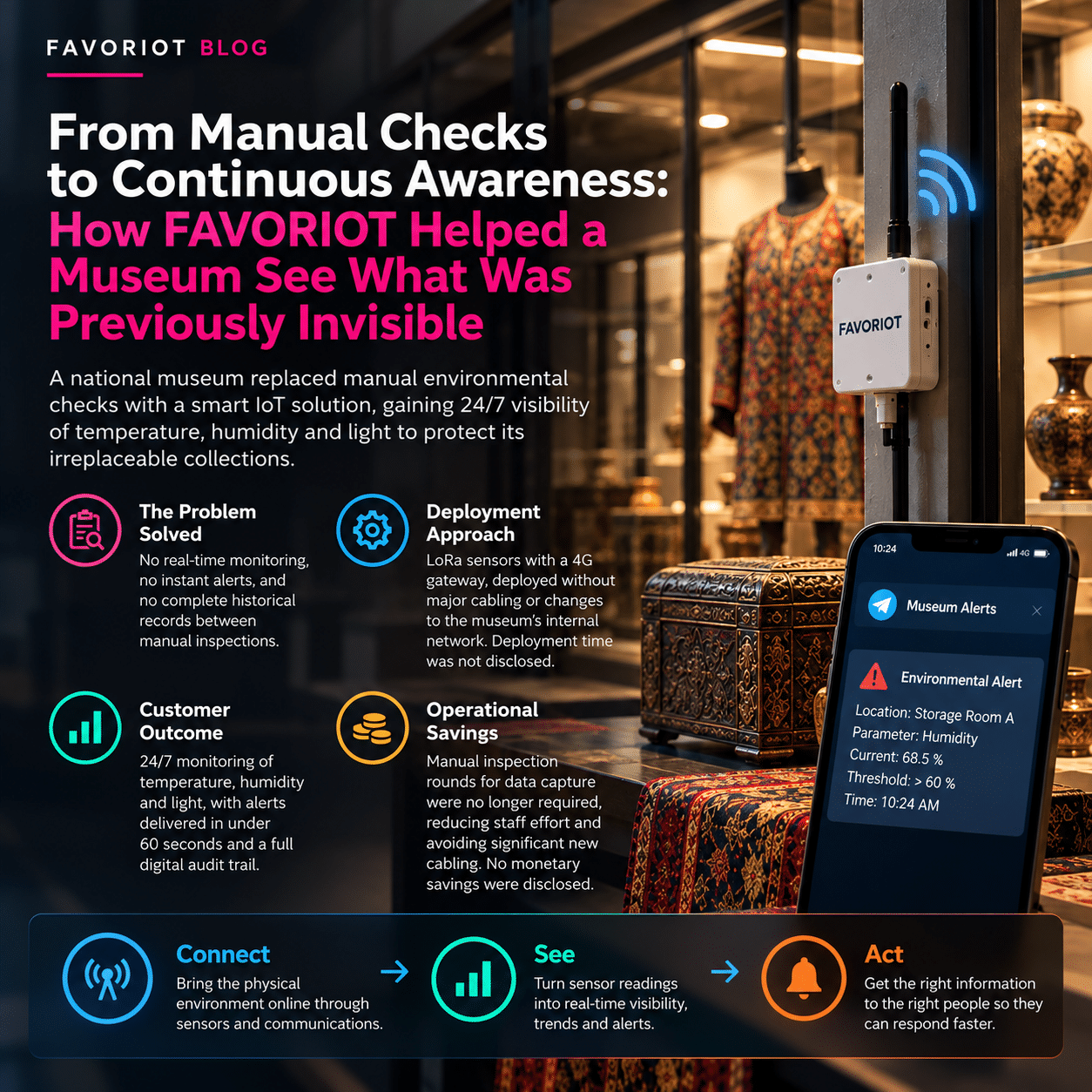
From Manual Checks to Continuous Awareness: How FAVORIOT Helped a Museum See What Was Previously Invisible

Protecting a museum collection involves more than physical security. Environmental conditions inside storage repositories can also affect the long-term preservation of sensitive objects, particularly when temperature, humidity or light remain outside appropriate ranges.

For one national museum, these conditions were monitored through scheduled manual inspections. Staff checked instruments and recorded readings, but each observation represented only one moment in time. Conditions could change between inspections without anyone immediately knowing.

The challenge was clear: the museum needed to move from periodic monitoring to continuous operational visibility.

The Problem We Needed to Solve

The museum did not simply need more environmental measurements. It needed to know what was happening between manual inspections.

The existing process could not provide continuous awareness or automatically notify personnel when readings crossed configured thresholds. Historical information was also less complete because environmental data depended on scheduled observations.

The objective was to create a system capable of monitoring conditions continuously, recording what happened and notifying the appropriate personnel when intervention might be required.

Connect: Bring the Physical Environment Online

The deployment focused on three parameters: temperature, relative humidity and light. LoRa sensors collected environmental readings from storage areas and transmitted them wirelessly to a gateway.

The gateway then used a 4G connection to send the information to the FAVORIOT Platform. This approach reduced the need for significant new cabling and allowed the initial deployment to operate independently of the museum’s internal network.

The exact deployment duration was not documented in the case study, so we do not make an unsupported claim about the number of days required. The architecture was designed to keep deployment focused and reduce unnecessary dependencies on existing infrastructure.

See: Replace Snapshots With 24/7 Visibility

Once connected, environmental information became continuously available through the FAVORIOT Platform. Personnel could see current readings, review historical trends and understand how conditions changed over time.

More importantly, the platform continuously evaluated incoming readings against configured thresholds. Instead of waiting for the next inspection to discover an abnormal condition, the system could identify the event as it happened.

The result was 24/7 monitoring of temperature, humidity and light, supported by a digital, time-stamped history of environmental readings and alert events.

Act: Turn Visibility Into Response

When readings exceeded configured thresholds, alerts could be sent automatically through Telegram to designated personnel. Notifications provided information such as the affected storage area, environmental parameter, current reading and timestamp.

Alert delivery could occur in less than 60 seconds. This meant personnel no longer had to depend solely on the next scheduled inspection to discover that something had changed.

This is where operational visibility becomes useful. The purpose of monitoring is not simply to display information. It is to help someone recognise that attention is required and respond sooner.

What Did the Customer Gain and Where Were the Savings?

One of the clearest operational improvements was the removal of manual inspection rounds specifically for environmental data capture. Readings were collected automatically, allowing staff to spend less time gathering routine information.

The project also reduced infrastructure requirements through wireless sensing and cellular communications. The measurable benefit was reduced manual data-collection effort combined with continuous monitoring and faster awareness of abnormal conditions.

For an organisation protecting irreplaceable assets, another potential benefit is avoiding the consequences of discovering a problem too late. That value may be difficult to express as a simple cost-saving percentage, but it is central to the purpose of the system.

Connect • See • Act™

The entire project can be understood through FAVORIOT’s Connect • See • Act™ framework.

Connect brings the physical environment into the platform through sensors and communications. See gives the customer continuous visibility into conditions, trends and abnormalities. Act turns that visibility into timely notification so people can respond when something needs attention.

This is the outcome we want from an Operational Visibility Platform. The goal is not simply to connect another sensor or create another dashboard. It is to reduce the time between something happening, someone knowing about it, and someone being able to act.
Building IoT Solutions Through the Strengths of Each Partner

September 28th, 2026 Posted by BLOG, HOW-TO, Internet of Things, IOT PLATFORM, Operational Blindness, PARTNER 0 thoughts on “Building IoT Solutions Through the Strengths of Each Partner”

A practical approach to collaboration

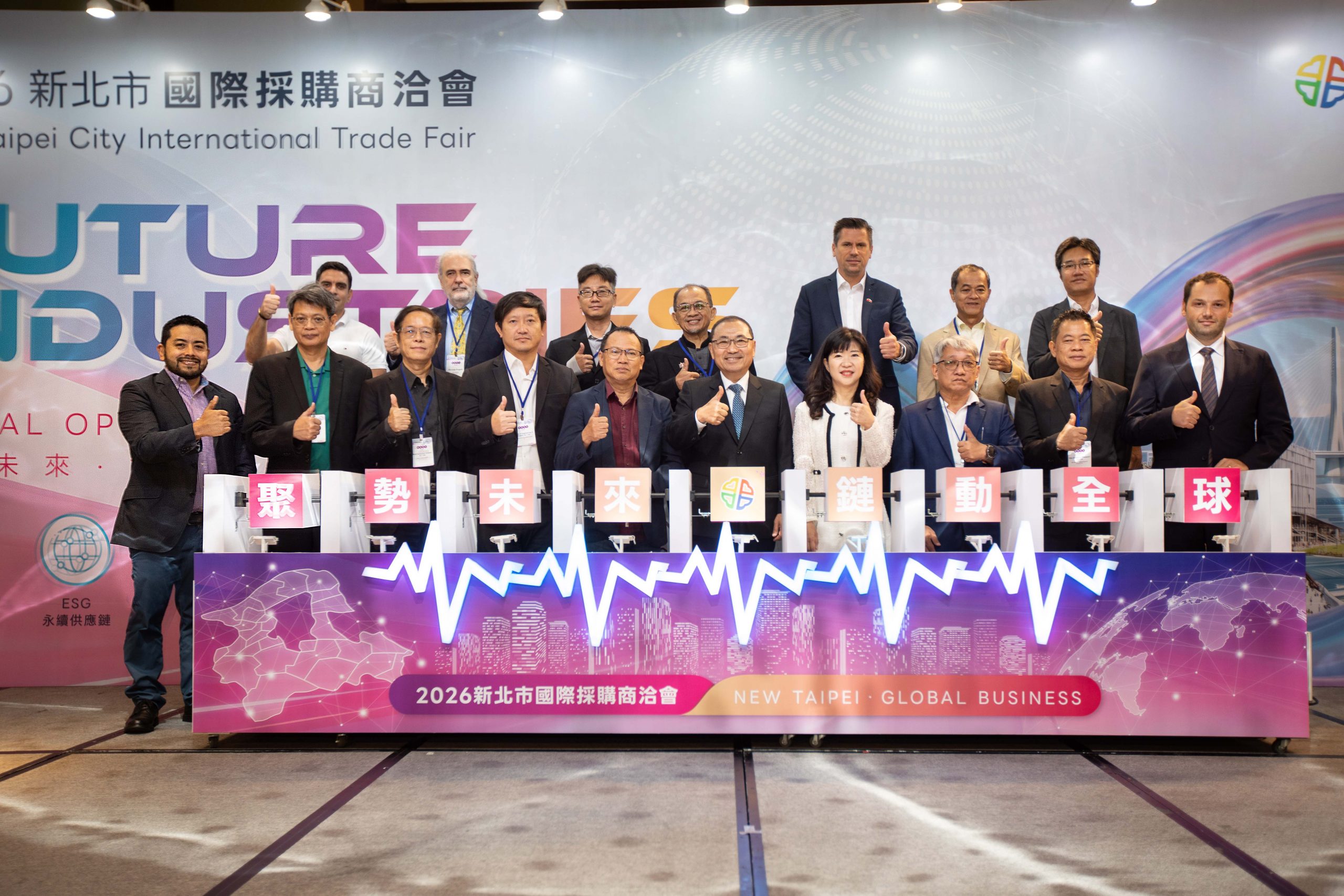
In our recent meetings with Taiwanese companies, we saw a clear understanding of how each business contributes to the IoT value chain. The companies we met had defined areas of expertise. Some focused on hardware and connectivity, while others worked with sensors, gateways, energy systems, communications or software.

This kind of focus can help customers bring together the capabilities an IoT project needs. A company does not have to supply every layer of a solution to play an important role. It can concentrate on its strongest capability and work with partners whose products and services complement its own.

IoT projects often span devices, networks, data platforms, applications and services. When suitable partners can work together across those layers, customers have more ways to shape a solution around their operational needs.

FAVORIOT’s role in the stack

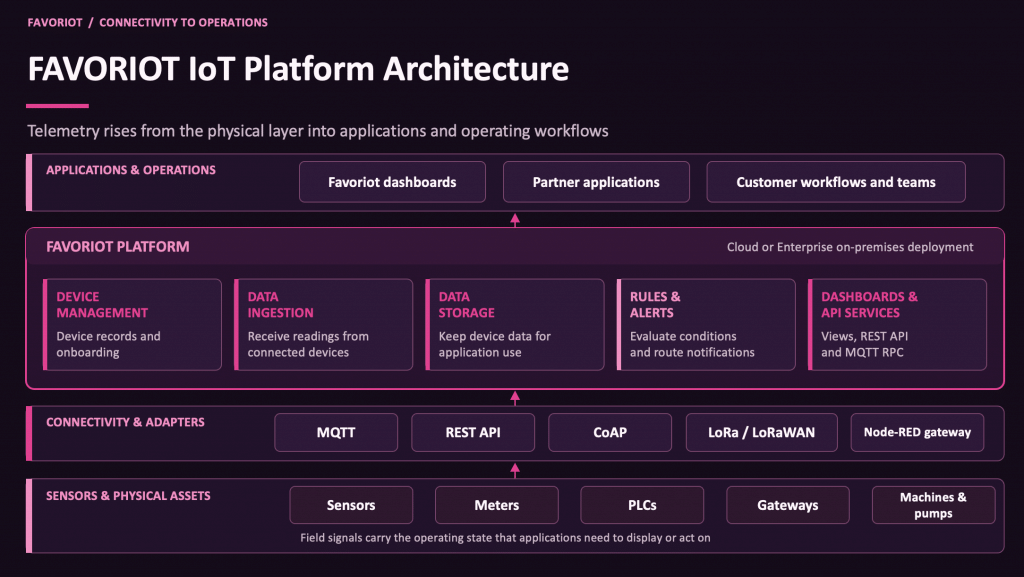
FAVORIOT provides an AIoT platform for operational visibility. It helps organisations collect data from connected assets, see what is happening and respond when action is needed.

We can work alongside companies that bring the sensors, devices, gateways, connectivity, specialist applications, deployment expertise or customer relationships. Each partner contributes a part of the solution, while the customer gets a clearer view of how the parts can work together.

Our aim is to make the platform useful within a wider ecosystem. Partners can bring their existing strengths and customer knowledge, while FAVORIOT provides the platform capabilities needed to connect data with operational awareness.

What customers can gain from multiple partners

A partner network with complementary capabilities can support customers in several ways:

  • A more complete solution: Customers can bring together devices, connectivity, platforms and services from companies with relevant expertise.
  • Clearer ownership: Each partner can define the work it is equipped to deliver and support.
  • Access to more markets: Partners can introduce the group to customers and regions that may be difficult to reach alone.
  • Quicker project starts: Existing products and experience can help teams avoid rebuilding every part of a solution.
  • More suitable options: Customers can choose technologies that fit their budget, site conditions and technical requirements.
  • Greater confidence: A customer’s trust in one partner can help begin conversations with other specialists in the group.
  • More than one route to market: Partners can bring opportunities through different sales channels and customer relationships.
  • Shared growth: A successful deployment can create new opportunities for services, joint offers and expansion into other markets.

Good collaboration starts with a clear understanding of the customer’s problem. The partners then need to agree on the project scope, responsibilities and how their products or services will work together. That gives each company a practical basis for contributing.

Making every role count

Our meetings in Taiwan reinforced the value of companies being clear about what they do well and open to working with others. For FAVORIOT, that means focusing on our role in operational visibility and connecting our platform with the strengths of partners across the IoT stack.

Customers benefit when the team around them brings the right capabilities and works towards a shared outcome. Partners benefit when they can contribute from their area of expertise and reach opportunities together.

That is the kind of ecosystem we want to build: each company brings a clear strength, the parts work together, and customers gain a practical path from connected assets to better operational awareness.

If you want to be part of Favoriot partner, contact us here.

FAVORIOT Use Case: Turning Equipment Data Into Operational Visibility

September 26th, 2026 Posted by HOW-TO, Internet of Things, IOT PLATFORM, NEWS, Operational Blindness, PARTNER 0 thoughts on “FAVORIOT Use Case: Turning Equipment Data Into Operational Visibility”

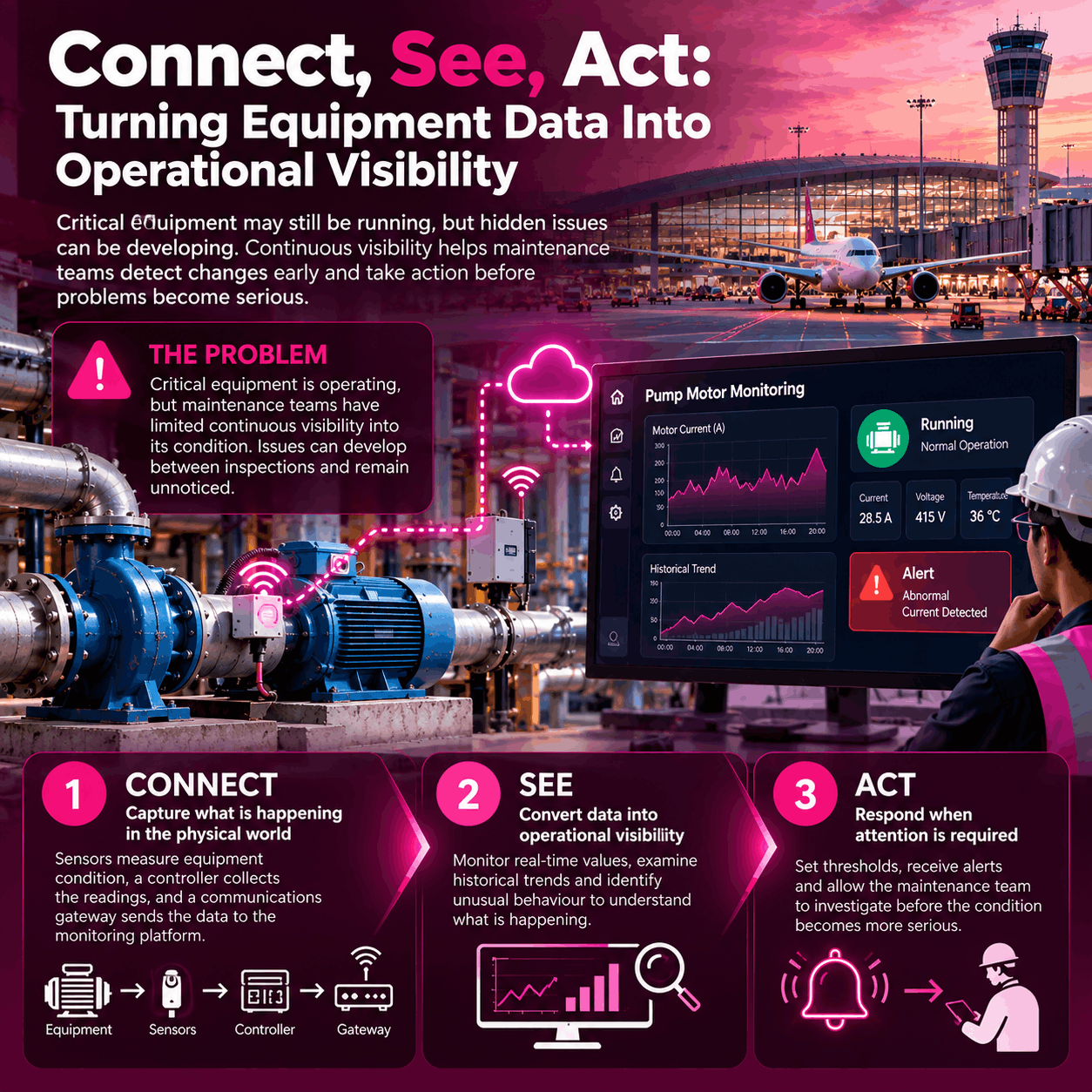
Critical equipment does not always fail without warning. Sometimes the warning signs already exist in electrical readings, operating patterns or other equipment data. The bigger problem is that the information is not visible to the right people at the right time.

An airport water pump monitoring project illustrates this challenge. The objective was not simply to put sensors on pumps or send data to the cloud. The operational requirement was to give maintenance personnel continuous visibility into how the equipment was behaving.

The Problem: Critical Equipment With Limited Visibility

Traditional equipment monitoring can depend heavily on local systems, periodic inspections and technicians visiting the site. While these methods remain part of maintenance operations, they leave gaps between inspections.

During those gaps, equipment behaviour can change. A motor may draw more current than usual, experience an unexpected drop or begin developing an unusual operating pattern. Unless somebody sees that change, the condition may remain unnoticed until the next inspection or until a larger problem develops.

The problem statement can therefore be expressed simply: How can an organisation continuously understand what is happening to critical equipment without requiring someone to be physically present?

The answer can be structured around three operational stages: Connect → See → Act.

CONNECT: Capture What Is Happening in the Physical World

Sensors collect information about the operating condition of the equipment. An industrial controller gathers those readings and an industrial communications gateway sends the information to a remote monitoring platform.

The result is a continuous digital connection between physical assets and the people responsible for them. Equipment that previously required local observation can now communicate its condition remotely.

SEE: Convert Data Into Something People Can Understand

Connectivity creates data, but operational teams need visibility. A monitoring platform can present current readings, historical trends and equipment behaviour in a form that allows engineers and maintenance personnel to understand what is happening.

Instead of asking only whether a pump is running, the team can ask whether it is operating normally, whether its behaviour has changed and whether that change requires investigation.

This is where IoT moves beyond connectivity. The objective is not simply to collect more data. The objective is to reduce uncertainty about what is happening across operations.

ACT: Respond When Attention Is Required

The final stage connects visibility with human action. Thresholds and rules can identify conditions that require attention and generate alerts for responsible personnel. The maintenance team can then investigate the equipment rather than waiting for a routine inspection or an obvious failure.

This creates a continuous operational loop where the physical and digital worlds support each other: 

Connect the assets that matter, see what is happening across operations, and act when the information indicates that intervention is required.

That is Connect → See → Act.

For organisations considering IoT, the starting question should therefore not be, “Which IoT technology should we buy?” A more useful question is: “What is happening in our operations today that we cannot see until someone physically checks it or something goes wrong?”

Once that blind spot is clearly defined, the role of IoT becomes much easier to understand. The technology is no longer the centre of the story. The operational problem is.

[Note: This is one of Favoriot‘s Commercial Use Case – Pump Monitoring]

Copyright © 2026 All rights reserved